Choosing the best 3PL for Shopify is no longer only about outsourcing packing and shipping. The right Shopify fulfillment partner should connect reliably with your store, keep inventory and order data visible, support your target markets, and handle the operational details that affect the customer experience.
For many brands, the best choice depends on product type, order volume, sales channels, and where inventory is sourced and stored. This guide compares 7 Shopify fulfillment companies for 2026-2027, including Lansil Global for brands that need China sourcing, cross-border fulfillment, and U.S. warehouse coverage through one supply chain partner.
Best 3PLs for Shopify at a Glance
| 3PL | Best for | Key Shopify fulfillment strength | Consideration |
|---|---|---|---|
| Lansil Global | Brands sourcing in China and selling internationally | China sourcing, quality control, China direct fulfillment, and U.S. fulfillment | Confirm the most suitable inventory allocation and integration setup for your store |
| ShipBob | Scaling DTC and omnichannel brands | Broad fulfillment network and Shopify-connected fulfillment technology | Pricing and warehouse strategy should be evaluated against actual order volume |
| ShipMonk | Subscription boxes, kitting, and growing multi-channel brands | Shopify integration, automation, and value-added fulfillment services | May be a better fit for brands with recurring or steadily growing order flow |
| Amazon Multi-Channel Fulfillment | Amazon-first sellers operating a Shopify store | Uses a shared pool of Amazon inventory to fulfill Shopify orders | Review packaging, service options, and customer-experience requirements |
| Red Stag Fulfillment | Heavy, oversized, fragile, and high-value products | Specialized handling for more complex parcel fulfillment | May not be the most cost-effective choice for lightweight, low-value items |
| GoBolt | North American DTC brands with delivery-focused needs | Fulfillment and last-mile delivery capabilities | Review order-volume requirements and market coverage |
| DHL Fulfillment Network | International expansion and cross-border operations | Global logistics infrastructure and fulfillment support | Often more suitable for established brands with international volume |
The best 3PLs for Shopify do not all serve the same type of merchant. A business shipping lightweight beauty products, for example, may prioritize low-cost pick-and-pack and branded packaging. A brand importing larger home goods may need stronger quality control, freight coordination, and warehouse capability before a customer places an order.
What Makes a Good Shopify 3PL?
A Shopify 3PL fulfillment provider receives inventory, stores products, picks and packs orders, ships parcels, processes returns, and often provides inventory or order data through an integrated platform. A strong provider should reduce manual work without reducing operational control.
When comparing Shopify fulfillment services, focus on five areas:
- Integration depth: Check whether the provider can connect to Shopify and automate order flow, tracking updates, inventory visibility, and returns-related workflows.
- Operational fit: A 3PL should be able to handle your products properly, including fragile items, oversized parcels, subscription boxes, bundles, products with expiry dates, or customized packaging.
- Warehouse coverage: Inventory should be positioned near major customer markets where practical. This can reduce delivery time and shipping costs.
- Total fulfillment cost: Compare receiving, storage, pick-and-pack, packaging, shipping, returns, account management, minimums, and potential peak-season surcharges—not just the advertised shipping rate.
- Scalability and support: Ask how the provider manages peak periods, stockouts, shipping exceptions, customer service escalation, and expansion into new sales channels or regions.
Shopify advises merchants to assess 3PL relationships through operational fit, technology fit, and cost fit. It also recommends reviewing real-time inventory visibility, order-status updates, return processes, integration documentation, and service-level expectations before selecting a provider.
1. Lansil Global: Best for China Sourcing and Flexible Global Fulfillment
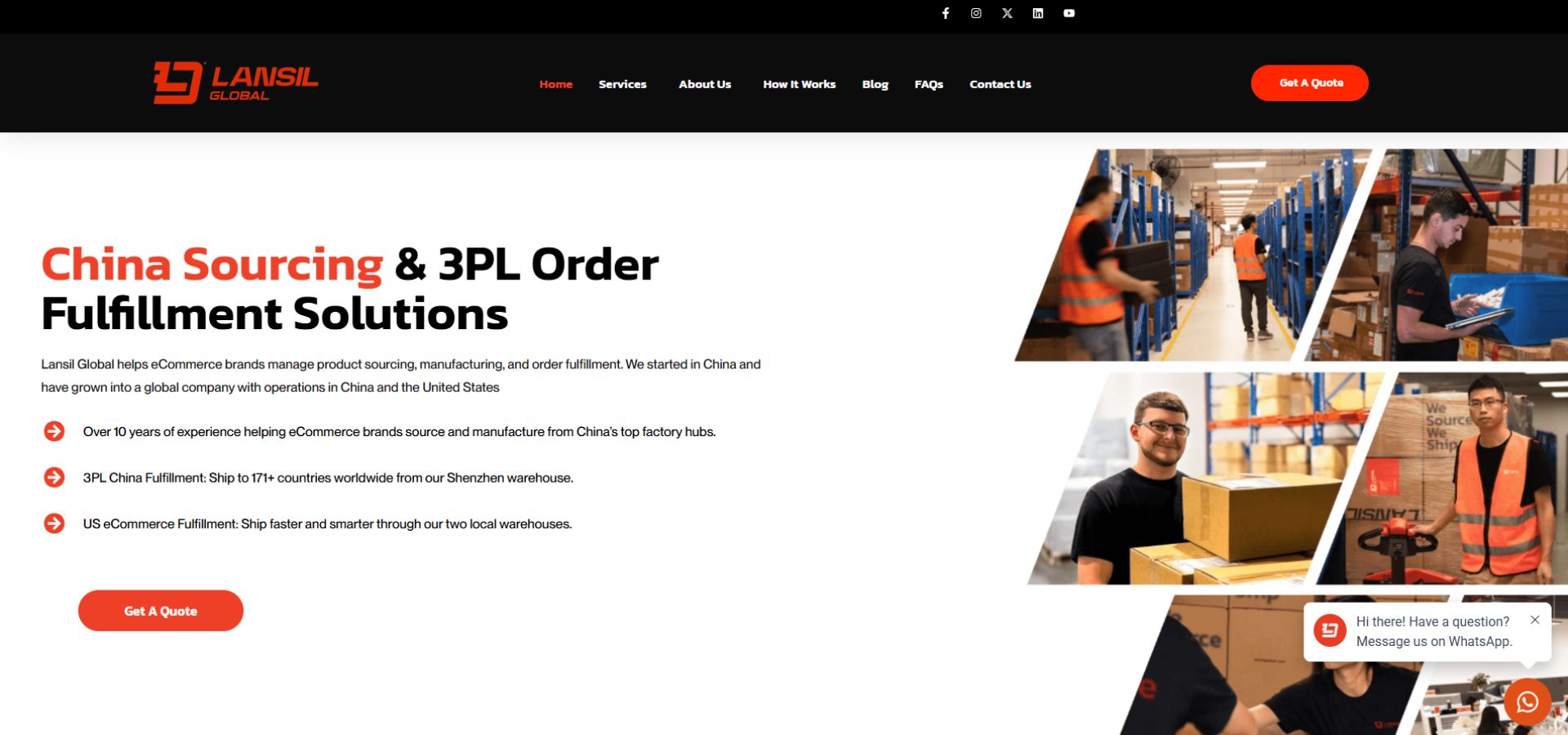
Founded in 2015, Lansil Global is one of the best 3PLs for Shopify for brands needing more than conventional warehousing. Having shipped over 20 million parcels worldwide, it provides a seamless cross-border bridge combining China sourcing, quality inspection, and custom packaging with agile domestic and global logistics.
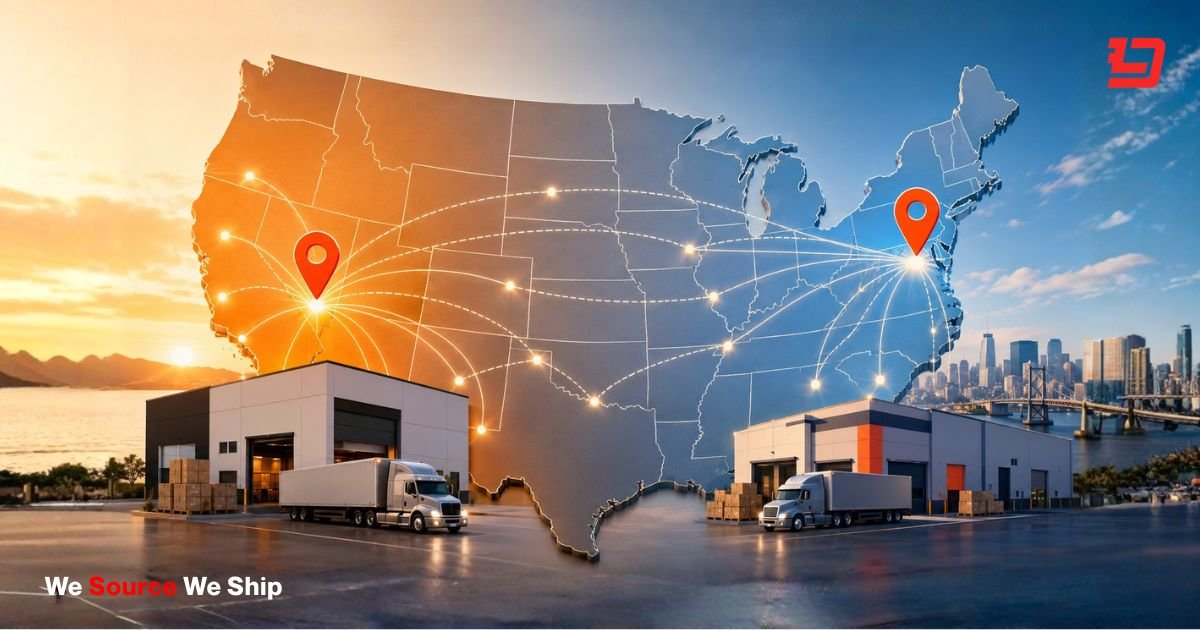
Its fulfillment network spans over 236,000 square feet across strategic hubs in China and the United States—including a 98,221 sq. ft. facility in Shenzhen, a 106,624 sq. ft. hub in Nevada, and a 32,069 sq. ft. center in Pennsylvania. This dual-market infrastructure empowers merchants with versatile inventory allocation:
- U.S. Domestic Fulfillment: Bi-coastal hubs enable fast 2-day U.S. fulfillment speed and simplified domestic returns for core North American sales.
- Direct-from-China Shipping: Cost-effective direct dispatch from Shenzhen allows brands to test new SKUs and fulfill global orders without early bulk freight commitments.
- Hybrid Allocation: Businesses can stage high-velocity SKUs in the U.S. for maximum speed while fulfilling niche or long-tail products directly from China.
Lansil Global also supports Shopify and Amazon sales through an integrated workflow covering order processing, fulfillment, shipping, tracking, and returns, making it suitable for brands managing DTC and marketplace operations through multiple channels.
Best for: Shopify brands sourcing in China, expanding internationally, operating Shopify and Amazon together, or seeking both flexible direct-from-China and rapid 2-day U.S. fulfillment.
2. ShipBob: Best for Scaling DTC Brands
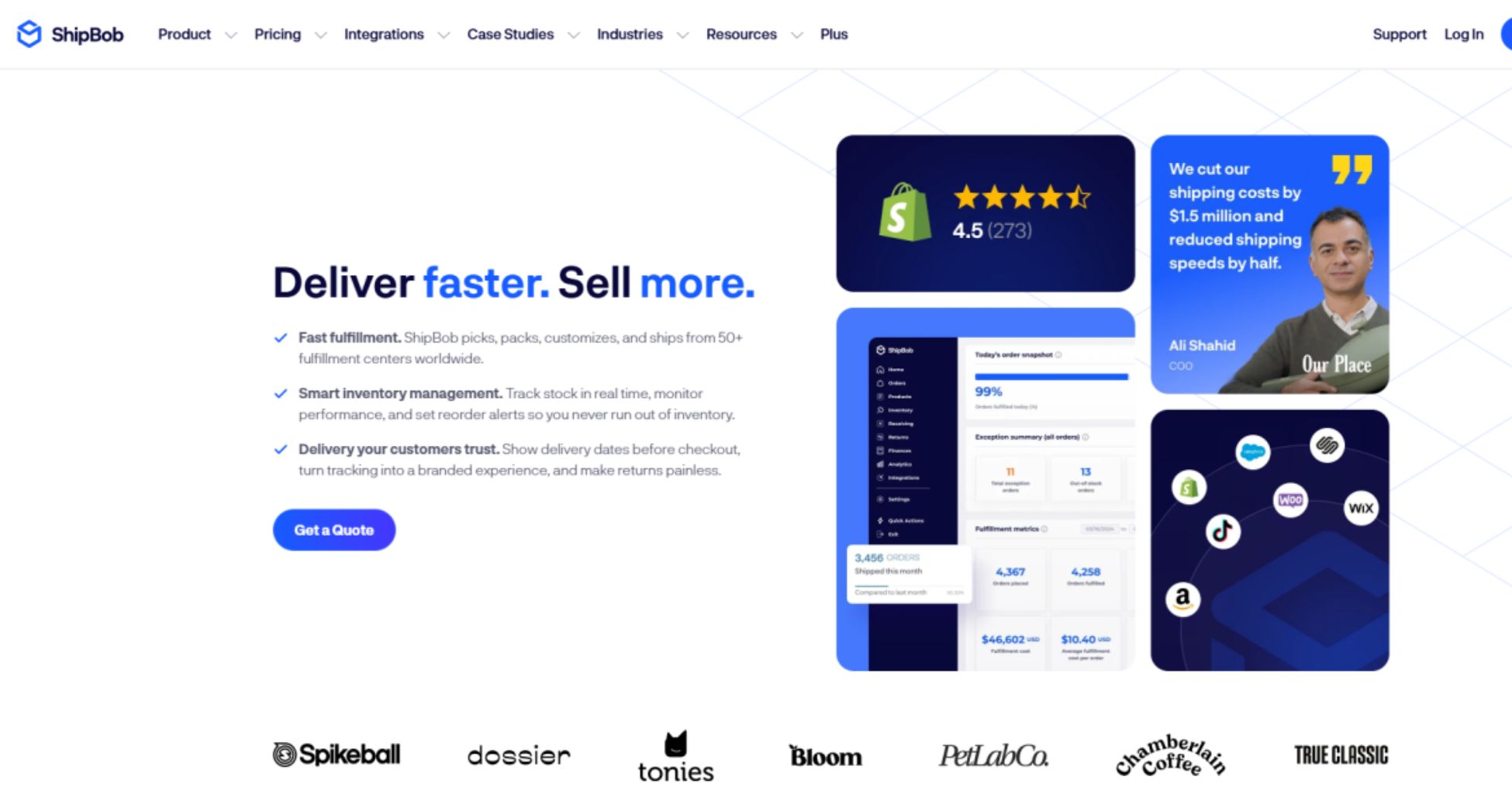
ShipBob is a widely recognized fulfillment partner for fast-growing direct-to-consumer brands that need distributed logistics and operational visibility. Operating a global network of over 50 fulfillment centers, ShipBob has fulfilled more than 300 million orders worldwide while maintaining an official 99.97% fulfillment accuracy rate.
For Shopify merchants, ShipBob offers an integration intended to connect products, orders, inventory, and fulfillment processes. Its Shopify materials describe store setup through its platform and real-time synchronization between Shopify and ShipBob systems.
ShipBob can be a strong fit for brands that want to distribute inventory across multiple regions, reduce shipping distances, and support both DTC and B2B operations. However, merchants should request a detailed quote based on their own SKU count, storage needs, monthly order volume, return profile, and target delivery regions.
Best for: Growing DTC brands that need distributed fulfillment, multi-channel capabilities, and operational visibility at scale.
3. ShipMonk: Best for Subscription Boxes and Kitting
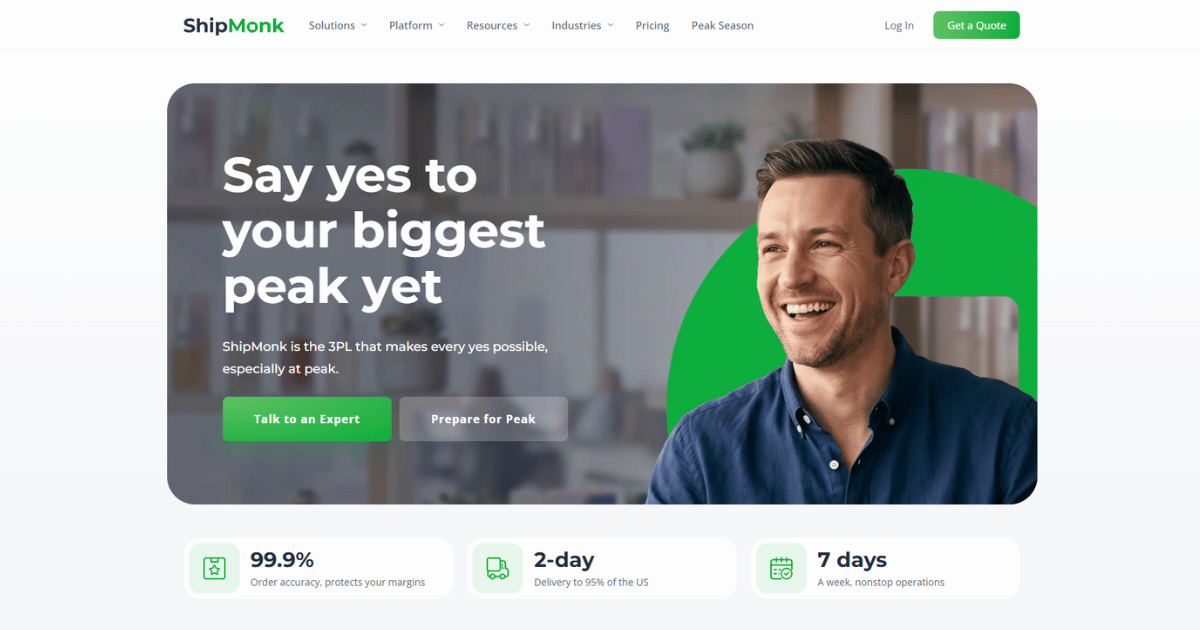
ShipMonk is a Shopify fulfillment partner that emphasizes technology-enabled fulfillment, Shopify connectivity, and operational support for growing ecommerce brands. Its Shopify integration is designed to import products, synchronize orders, and help merchants manage inventory through its fulfillment platform.
The provider is often relevant for merchants with subscription boxes, product bundles, promotional kits, and other fulfillment workflows that require more than standard pick-and-pack. These needs can include kitting, inserts, customized packaging, and recurring order management.
ShipMonk also positions itself as a Shopify Fulfillment Network partner, making it relevant for merchants seeking fulfillment options within Shopify’s partner ecosystem.
Best for: Subscription brands, bundled-product businesses, and multi-channel merchants that need structured fulfillment automation.
4. Amazon Multi-Channel Fulfillment: Best for Amazon-First Shopify Sellers
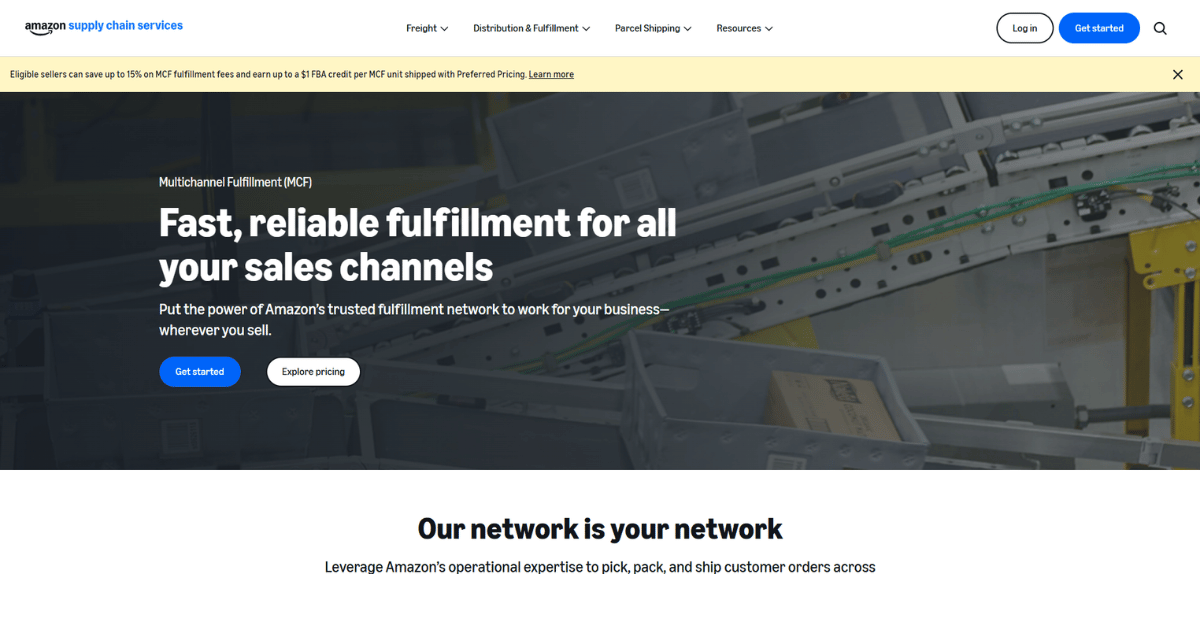
Amazon Multi-Channel Fulfillment, commonly called MCF, lets eligible merchants use Amazon’s fulfillment network to pick, pack, and ship orders placed outside Amazon, including through Shopify. Amazon provides a free Shopify app that connects Shopify stores with MCF, allowing merchants to manage product catalog settings and orders through the integration.
This option can be practical for businesses that already hold inventory in Amazon fulfillment centers and want to use a single inventory pool for Amazon, Shopify, Buy with Prime, and other eligible sales channels. Amazon states that its MCF app for Shopify provides a direct connection to its fulfillment service and is currently designed for U.S. orders.
MCF should be evaluated carefully if packaging control, brand presentation, specific carrier preferences, or specialized operational workflows are important. It may be most useful when Amazon is already a central sales channel rather than when a brand is building a fully independent DTC fulfillment experience.
Best for: Amazon-first sellers that want to use existing Amazon inventory for Shopify order fulfillment.
5. Red Stag Fulfillment: Best for Heavy or High-Value Products
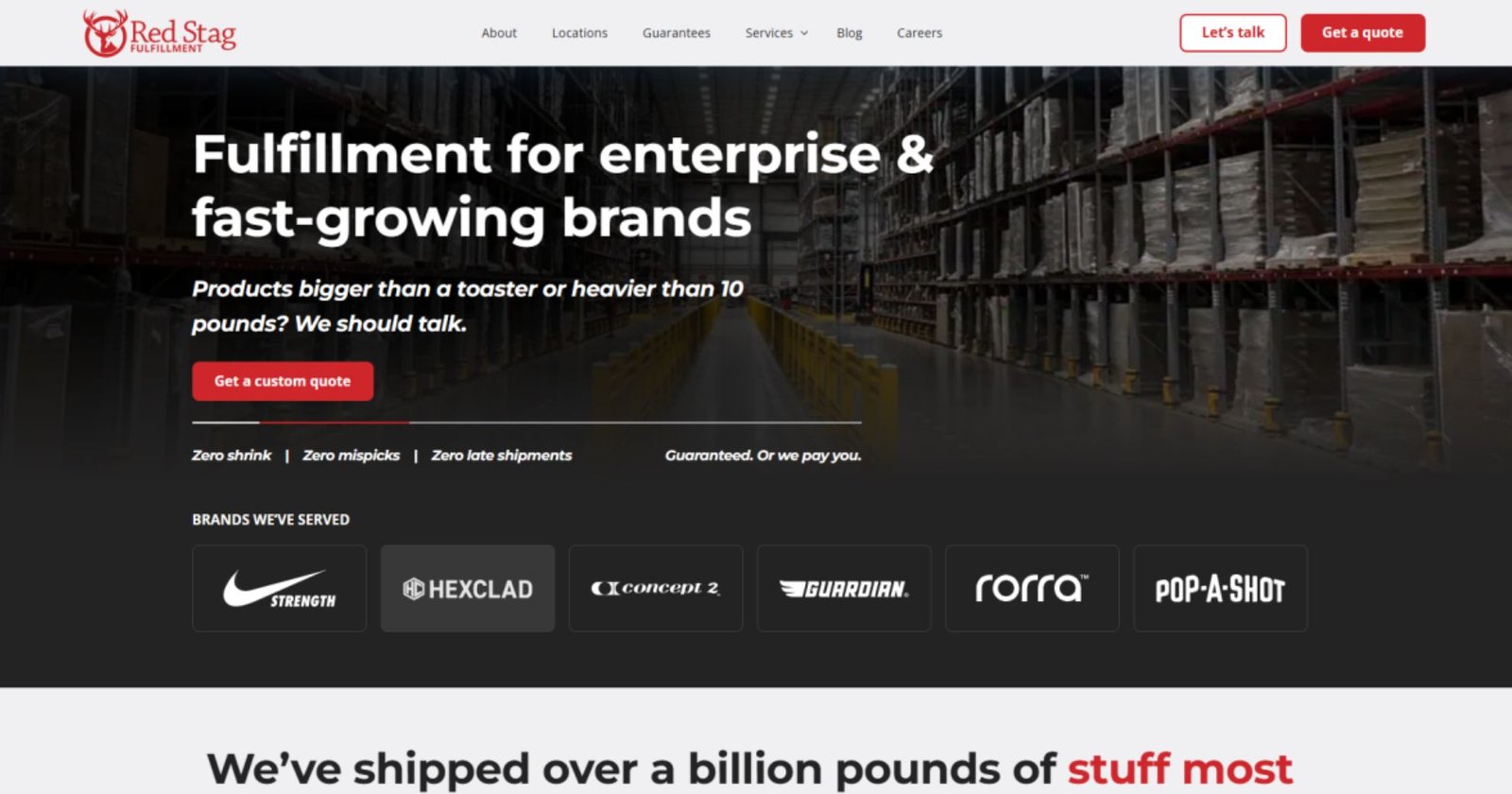
Red Stag Fulfillment is commonly included in Shopify 3PL comparisons because it specializes in products that can be harder or more expensive to ship. These may include heavy, oversized, fragile, high-value, or technically complex items.
For merchants selling furniture, large electronics, fitness equipment, premium home products, or fragile goods, specialized handling can matter more than finding the lowest possible standard parcel rate. The right provider should have processes for dimensional weight, protective packaging, damage prevention, and exception management.
Best for: Shopify brands selling heavy, bulky, fragile, or higher-value products.
6. GoBolt: Best for North American Delivery-Focused Brands
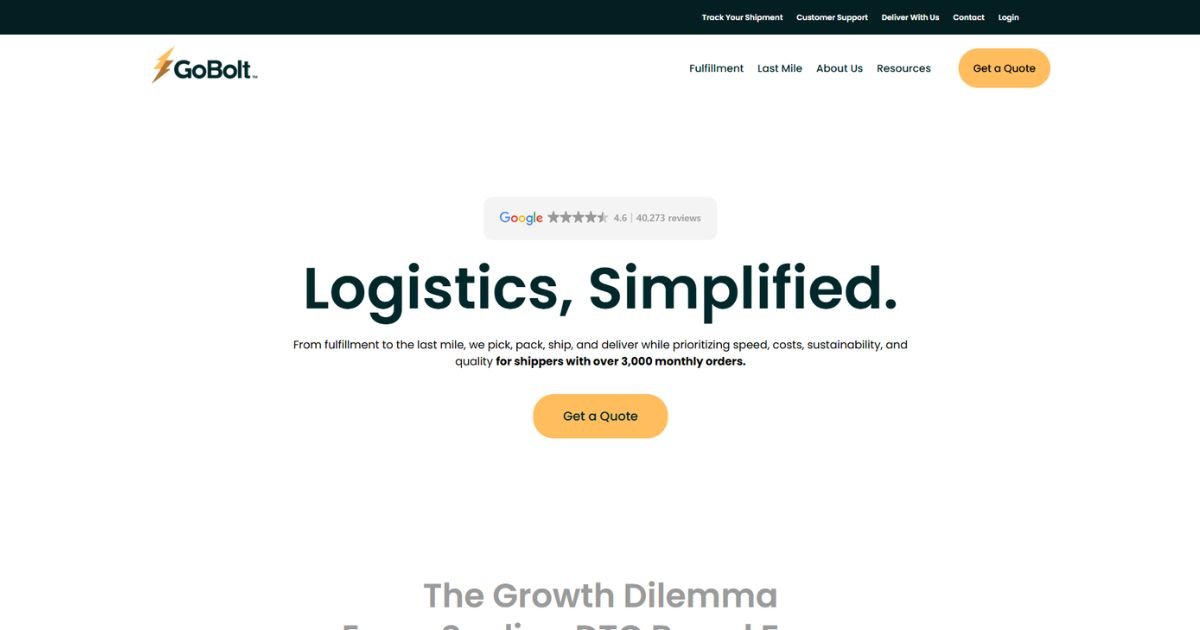
GoBolt combines fulfillment operations with parcel delivery capabilities in North America. Shopify describes the company as a technology-driven fulfillment and delivery provider with experience supporting ecommerce brands, including cross-border operations in North America.
This model can appeal to brands that view delivery speed, local coverage, and final-mile execution as major parts of the customer experience. Shopify’s provider information indicates that GoBolt may be more suitable for brands with meaningful order volume rather than early-stage stores with limited monthly demand.
Best for: North American Shopify brands that need fulfillment and delivery strategy to work together.
7. DHL Fulfillment Network: Best for International Growth
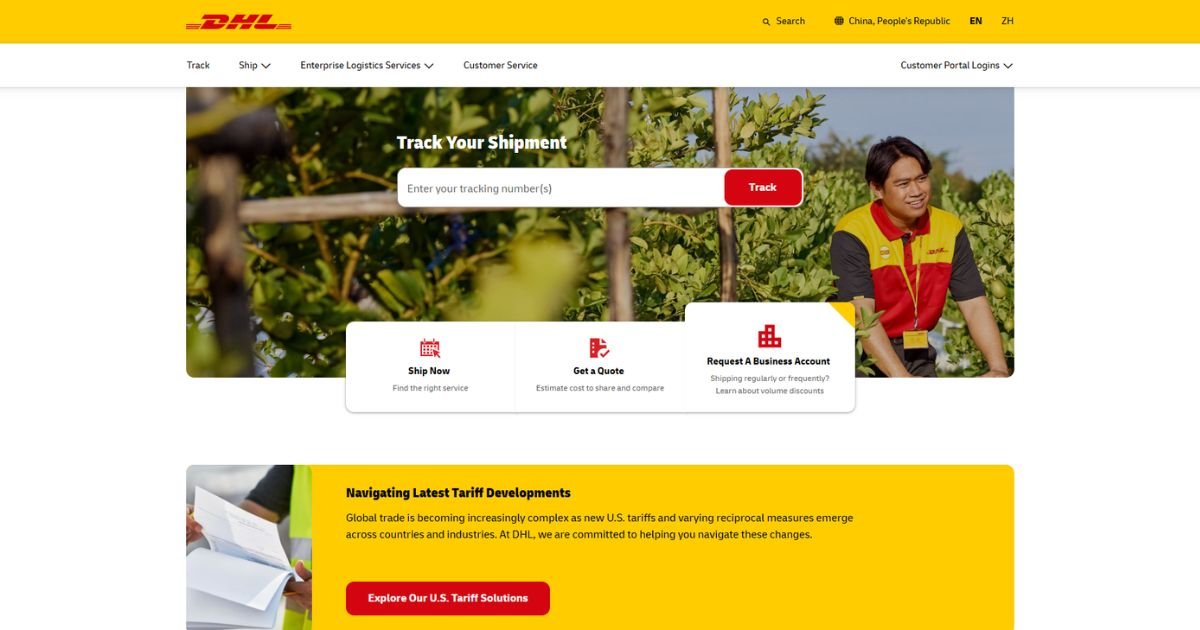
DHL Fulfillment Network is a suitable option for established brands expanding across borders. Shopify highlights DHL’s global fulfillment infrastructure, cross-border logistics capabilities, and experience supporting merchants with international distribution needs.
International Shopify order fulfillment involves more than choosing a warehouse. Brands may need to consider customs processes, duties and taxes, delivery expectations, local carrier choices, returns, and inventory placement in regional markets. A globally established provider can be useful when these requirements become more complex.
Best for: Established Shopify businesses expanding into multiple international markets.
How to Choose the Best 3PL for Your Shopify Store
Before signing with a Shopify fulfillment partner, prepare a practical operating profile. Include monthly order volume, SKU count, product dimensions and weight, sales regions, current shipping cost, return rate, packaging requirements, and planned channels such as Amazon, TikTok Shop, wholesale, or retail.
Then ask each provider:
- How does your Shopify integration manage order synchronization, tracking updates, inventory data, cancellations, and returns?
- Which warehouse locations are recommended for our customers and products?
- What are all receiving, storage, pick-and-pack, packaging, shipping, return, and minimum-fee charges?
- Can you manage kitting, branded inserts, custom packaging, quality checks, and FBA preparation if needed?
- What service levels, peak-season processes, and escalation procedures apply to our account?
The best 3PL for Shopify is not necessarily the provider with the largest warehouse network. It is the one that fits your supply chain, product profile, target markets, technology needs, and customer-experience standards.
Work With Lansil Global
Lansil Global helps Shopify brands connect product sourcing, quality control, fulfillment, and delivery through a flexible China-to-global supply chain model. Whether you need direct China fulfillment, U.S. warehouse support, Amazon FBA preparation, customized packaging, or a hybrid inventory strategy, Lansil Global can help assess the operational approach that fits your business.
Contact Lansil Global to discuss your Shopify fulfillment needs and request a tailored supply chain and 3PL solution!