Growth changes the way brands manage fulfillment. As order volumes, product ranges, sales channels, and customer locations expand, processes that worked at an earlier stage may become difficult to maintain. We need fulfillment systems that can adapt to changing demand while keeping inventory, warehousing, shipping, and returns organized. The right structure is therefore less about choosing the largest operation and more about matching fulfillment capabilities with the brand’s actual growth path.
Why Scalability Starts with the Fulfillment Model
A scalable fulfillment model should allow a business to increase activity without rebuilding its entire logistics process. Storage, picking, packing, shipping, inventory management, and returns need to work as connected functions rather than isolated tasks.
For growing brands, an ecommerce fulfillment partner can take over operational activities that would otherwise require additional internal resources. This can make it easier to adjust warehouse capacity, shipping arrangements, and order processing as business requirements change.
The key is flexibility. A fulfillment arrangement should support current requirements while leaving room for additional products, markets, and sales channels.
Match Warehouse Capacity to Demand
Inventory requirements rarely remain constant throughout a brand’s development. New product launches, promotional campaigns, seasonal demand, and expansion into new markets can all affect storage needs.
We therefore need to consider whether a fulfillment provider has access to suitable warehouse infrastructure and whether its locations align with customer demand. Multiple fulfillment locations can also provide options for positioning inventory closer to important markets.
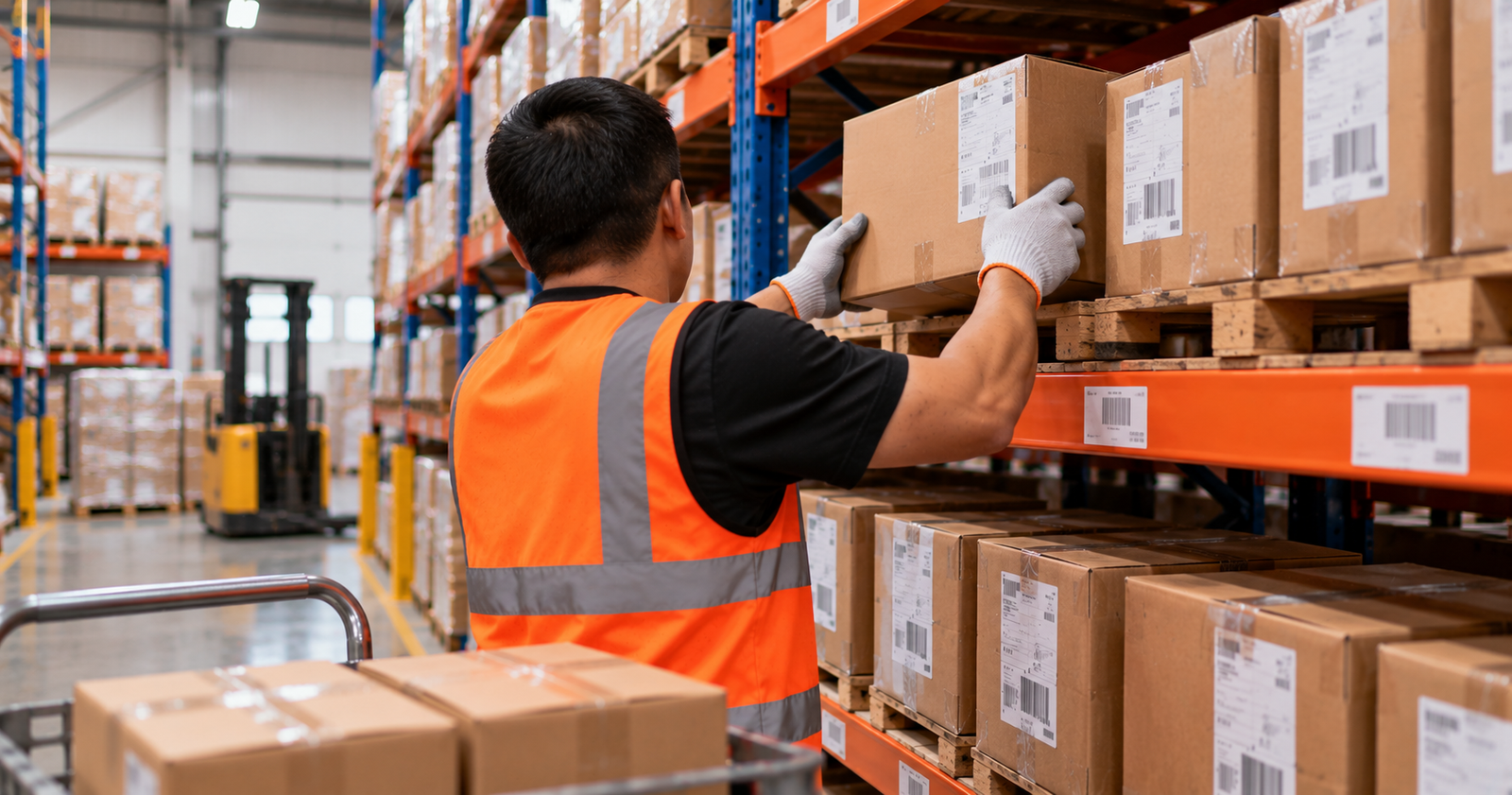
The objective is not simply to store more goods. Effective warehousing should help maintain accurate inventory records, organize stock efficiently, and support consistent order processing as volumes change.
Connect Inventory with Order Processing
Inventory accuracy becomes increasingly important when a business manages more products and orders. Poor visibility can contribute to stock discrepancies, delayed fulfillment, or unnecessary replenishment decisions.
Modern fulfillment operations commonly connect order information with warehouse processes so that incoming orders can move through picking, packing, and dispatch with fewer manual steps. Platform integration can also reduce repetitive data entry.
For businesses serving wholesale customers, B2B order fulfillment services may require additional coordination because order quantities, packaging requirements, shipping arrangements, and documentation can differ from direct-to-consumer orders.
Build Around Multiple Sales Channels
Growing brands often sell through more than one channel. A company may operate its own online store while also using marketplaces, social commerce, wholesale accounts, or other sales routes.
A scalable fulfillment structure should therefore be able to receive orders from different sources and translate them into consistent warehouse instructions. Integration is useful because it helps centralize operational information rather than forcing teams to manage every channel separately.
At the same time, businesses should examine the actual integrations available before choosing a provider. Compatibility with their commerce platforms and order-management processes matters more than the number of integrations advertised.
Consider Geographic Fulfillment Options
International growth introduces another operational question: where should inventory be stored before orders are shipped?
Brands sourcing products from China may choose direct fulfillment from China for certain markets, while other inventory may be positioned in regional warehouses closer to customers. The appropriate arrangement depends on product characteristics, destination markets, shipping requirements, and inventory strategy.
A provider with facilities in different regions can give brands more options as their customer base develops. However, geographic expansion should be planned around actual demand rather than simply adding warehouses without a clear inventory strategy.
Keep Quality Control Connected to Fulfillment
Scaling orders also means scaling the consequences of product or packaging errors. Quality control is therefore closely connected to fulfillment, particularly when products are sourced and manufactured internationally.
Inspection procedures can be applied before goods enter the fulfillment flow, helping identify issues before products are shipped to customers. Clear specifications and documented inspection processes are useful for maintaining consistency across suppliers and product batches.
For brands working with China-based manufacturing, integrating sourcing, manufacturing coordination, quality control, and fulfillment can reduce the number of separate operational handoffs.
Make Returns Part of the Original Plan
Returns should not be treated as an afterthought. As sales grow, returned products can affect inventory records, warehouse workload, customer service, and resale decisions.
A structured returns process should define how products are received, inspected, categorized, and either restocked or handled according to the brand’s instructions. The process should also keep inventory information synchronized with the physical movement of goods.
Planning returns alongside outbound fulfillment gives growing businesses a clearer view of the complete order lifecycle, rather than focusing only on the initial shipment.
Evaluating Fulfillment Needs with Real Operational Data
Scalable fulfillment is also a data-management challenge. Businesses need visibility into inventory levels, order status, shipping activity, returns, and other operational information to make informed decisions.
Instead of expanding warehouse resources based only on assumptions, brands can examine their order patterns and market distribution to determine where capacity is actually required. This supports more deliberate decisions about inventory placement and logistics.
The same principle applies to outsourcing. We should evaluate fulfillment providers according to measurable operational requirements, service scope, communication processes, integration capabilities, and geographic coverage.
A Supply Chain Structure That Can Evolve
Lansil Global approaches fulfillment as part of a broader supply chain rather than as a standalone warehouse function. Established in Hong Kong in 2015, the company focuses on China sourcing and order fulfillment, with fulfillment centers and offices spanning Shenzhen, Nevada, and Pennsylvania. Its services include China product sourcing, manufacturing and quality control, direct China fulfillment, USA order fulfillment, Amazon FBA preparation, and China global freight. The company states that it has fulfilled more than 15 million orders, has a team of more than 100, and maintains connections with more than 2,000 China vendors and suppliers.
For growing brands, this broader structure can connect sourcing, production coordination, inventory handling, and fulfillment within one supply chain framework. Lansil Global‘s role is particularly relevant for businesses that source from China while serving customers across different markets, giving them a single operational point across several stages of the supply chain.
Choosing a scalable fulfillment solution ultimately requires a practical assessment of how a business expects to grow. We should examine warehouse locations, inventory processes, integrations, shipping arrangements, returns, quality control, and the ability to support changing order patterns. A fulfillment model built around these operational requirements can give growing brands a more structured foundation for expansion without assuming that every business needs the same logistics setup.