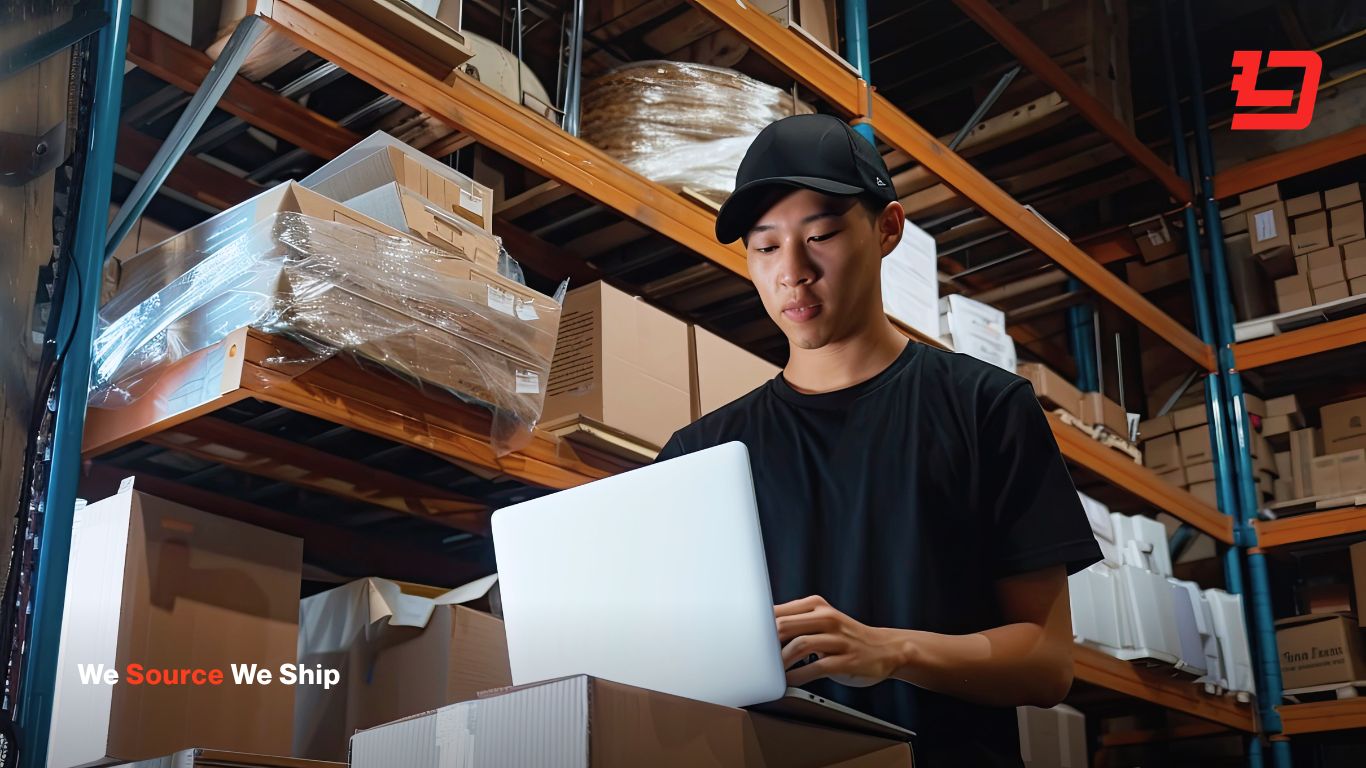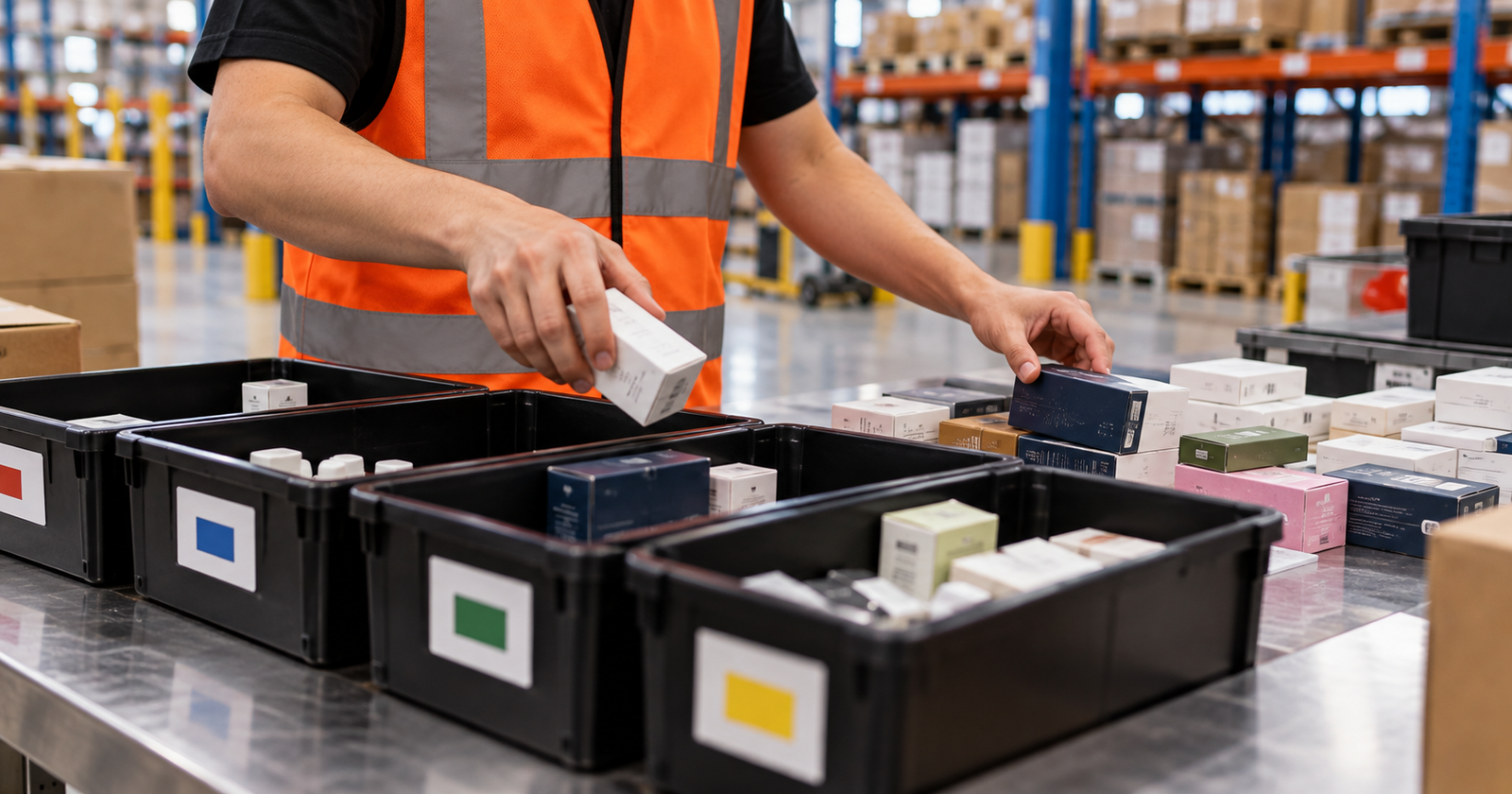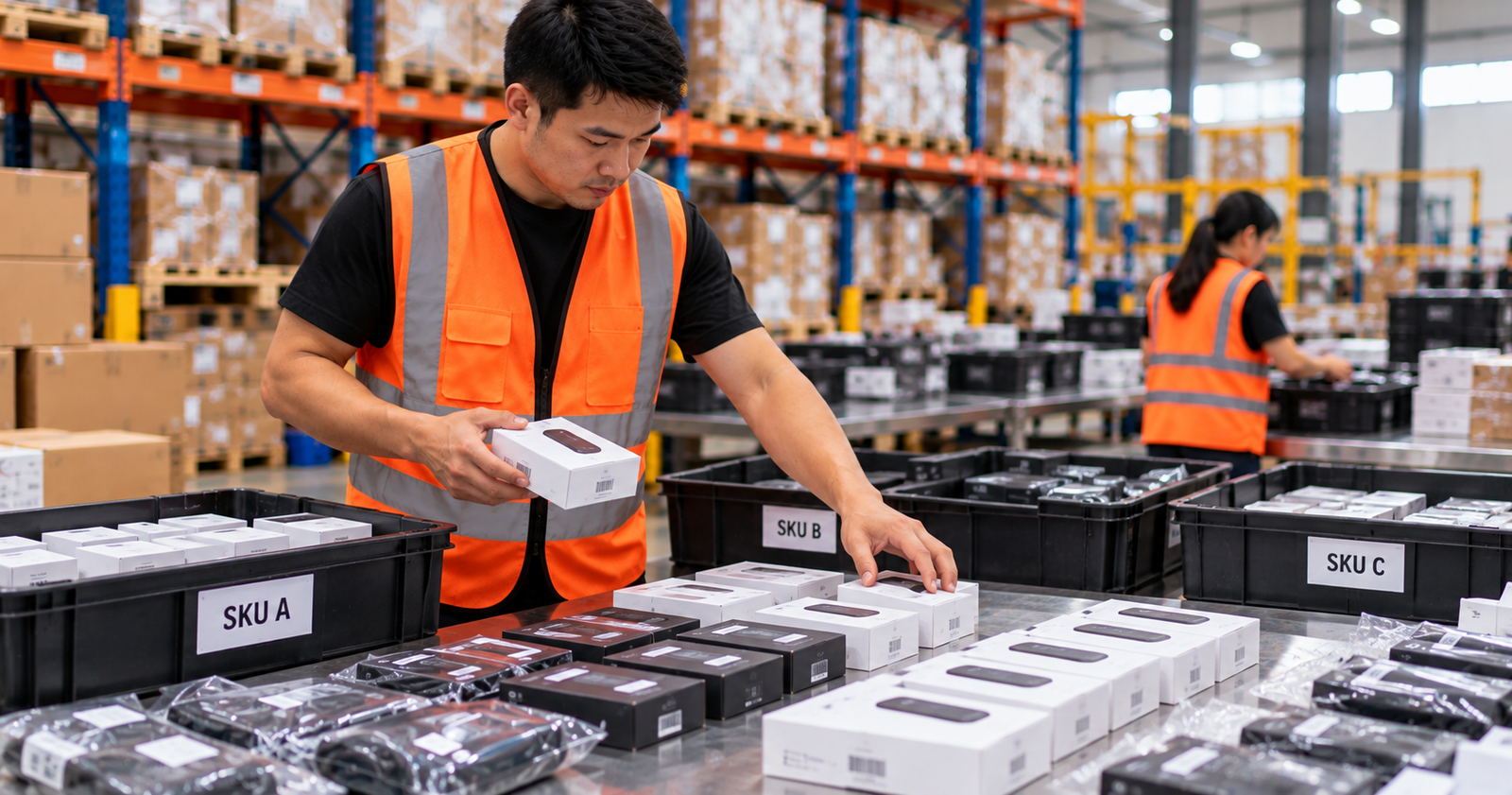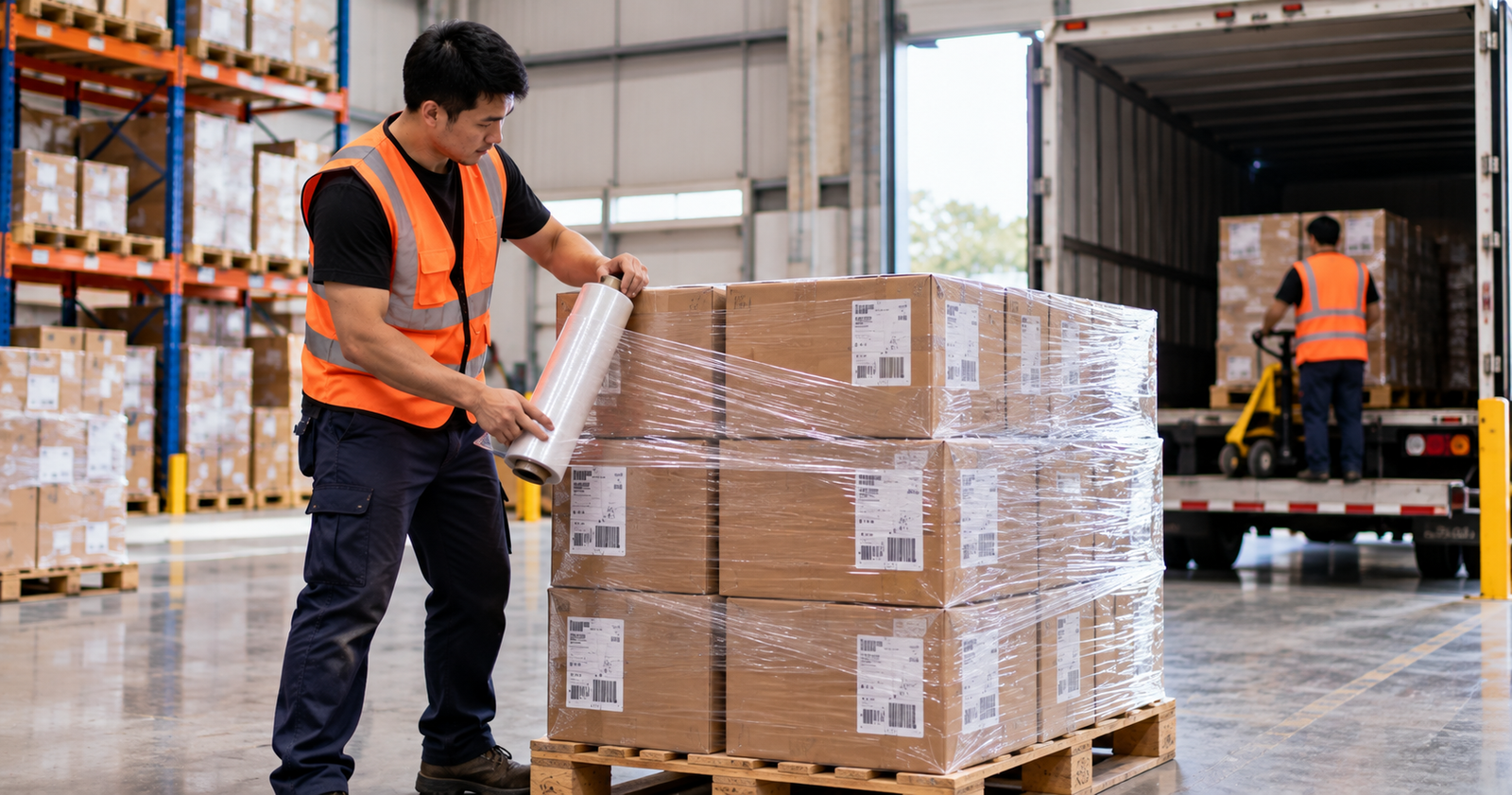
Choosing between China fulfillment and US fulfillment depends on where products are manufactured, where customers are located, delivery expectations, and how much inventory a business wants to position overseas. China-based fulfillment keeps inventory closer to suppliers and can support global shipping, while US fulfillment places stock closer to American customers for faster domestic delivery.
For many growing ecommerce brands, the best answer is not simply China or the US. It is choosing the right fulfillment location for each SKU(stock keeping unit), market, and stage of growth.
What China Fulfillment and US Fulfillment Mean
With China fulfillment, products are stored at a China-based fulfillment center after manufacturing. When an order is placed, the 3PL(Third-Party Logistics)picks, packs, and ships the product directly to the customer overseas.
US fulfillment follows a different flow. Products manufactured abroad are generally moved in bulk to a US warehouse before individual orders are processed. Once inventory is stored domestically, the 3PL picks and packs each order for local delivery.
The key trade-off is inventory proximity to production versus inventory proximity to customers.
1. Compare Delivery Speed and Customer Location
Delivery expectations should be one of the first considerations in a 3PL fulfillment decision.
US fulfillment generally creates a shorter domestic route when most customers are in the United States because inventory has already completed the international freight stage before the customer places an order.
China fulfillment requires an international delivery leg for each customer order. Delivery time varies by destination, shipping method, parcel characteristics, and customs processing.
Customer geography matters as much as speed. A brand selling mainly in the US may benefit from domestic inventory, while a brand serving several countries may value the flexibility of shipping from one China-based hub.
2. Consider How Much Inventory You Want to Commit
Inventory planning is one of the biggest differences between China fulfillment and US fulfillment.
To use a US warehouse, brands sourcing from China typically need to forecast demand, manufacture inventory, and move stock overseas before customer orders occur. This works well for products with stable sales, but inaccurate forecasts can create overstock or stockouts.
China fulfillment can keep inventory closer to manufacturing and may suit:
- New products still being tested
- Long-tail or lower-volume SKUs
- Products with many variants
- Brands selling into multiple countries
- Demand that changes quickly
The trade-off is that international parcel delivery still needs to meet customer expectations.
3. Calculate the Entire Fulfillment Cost
Comparing only warehouse fees or shipping quotes can be misleading. A useful ecommerce fulfillment comparison should cover the complete route from inventory receipt to final delivery.
For China fulfillment, consider warehousing, pick and pack, packaging, international parcel shipping, customs processing, returns, and exception handling.
For US fulfillment, consider bulk international freight, customs clearance, inland transportation, receiving, storage, pick and pack, domestic shipping, inventory carrying cost, and returns.
China fulfillment may reduce some overseas inventory commitments, while US fulfillment can improve domestic delivery speed. The better option is the one with the stronger total delivered cost, not simply the lowest individual logistics fee.
4. Match the Fulfillment Model to SKU Demand
Not every product should follow the same fulfillment route.
Products with reliable US sales are easier to position in a US warehouse because replenishment needs can be forecast with greater confidence. China fulfillment can be useful for products with less predictable demand, especially when the catalog includes many colors, sizes, or variations.
Review each SKU based on:
- Monthly sales volume
- Demand consistency
- Product size and weight
- Gross margin
- Number of variants
- Replenishment lead time
- Customer destination
- Delivery expectations
- Return frequency
This SKU-level approach is often more useful than choosing one model for the entire catalog.
5. Plan for Returns and After-Sales Handling
Returns should be considered before inventory is assigned to a warehouse.
For US customers, domestic fulfillment can simplify the return journey because returned products can go back to a local warehouse for inspection, inventory adjustment, or other handling.
Direct China fulfillment needs a practical local return solution when sending every returned parcel internationally is inefficient. We support returns for direct-from-China orders through our US warehouses in Pennsylvania and Nevada.
6. Consider a Hybrid China and US 3PL Strategy
A hybrid model uses both locations instead of forcing every SKU through one route.
A practical approach may be:
- Keep proven US bestsellers in US warehouses.
- Fulfill new or lower-volume SKUs directly from China.
- Replenish US inventory from China as demand becomes predictable.
- Use China fulfillment for customers outside the US when appropriate.
This model can combine local inventory for high-demand products with greater flexibility for the wider catalog. It also requires accurate stock records, clear routing rules, and coordinated replenishment.
When Does China Fulfillment Make More Sense?
A China 3PL may be suitable when keeping inventory closer to production provides more flexibility than pre-positioning stock in a single overseas market.
We operate direct China fulfillment from Shenzhen and ship orders to 171+ destinations, with typical delivery windows including 5–8 days to the USA, 3–5 days to the UK, and 6–10 days to Europe.
When Does US Fulfillment Make More Sense?
US fulfillment is generally more suitable when the United States is a major sales market, order volume is established, inventory can be forecast reliably, and faster domestic delivery matters.
We operate US fulfillment centers in Henderson, Nevada, and Mechanicsburg, Pennsylvania, with 106,624 square feet of warehouse space in Nevada and 32,000 square feet in Pennsylvania. Our standard US fulfillment delivery time is 2–4 days.
How Lansil Global Supports Both Fulfillment Models
Lansil Global supports brands before and after inventory leaves China. Our services include China product sourcing, manufacturing and quality control, direct China fulfillment, China global freight, US order fulfillment, returns handling, and FBA preparation.
For brands sourcing products in China, fulfillment does not need to be treated as an isolated warehouse decision. Inventory can be inspected and managed closer to production, shipped directly to customers where appropriate, or moved into US fulfillment centers when domestic stock better matches demand.
There is no universal winner in the China fulfillment vs. US fulfillment comparison. China fulfillment can provide greater inventory flexibility and global reach, while US fulfillment can shorten domestic delivery routes for brands with established American demand.
Growing ecommerce businesses should compare customer location, SKU velocity, total delivered cost, inventory commitment, returns, and delivery expectations before choosing a model. As volume increases, using both China and US warehouses may provide more flexibility than relying entirely on one location.
Contact us with your SKU profile, order volume, customer destinations, sourcing requirements, and delivery goals to discuss whether China fulfillment, US fulfillment, or a hybrid 3PL strategy better fits your supply chain.