Amazon FBA margins are often discussed in terms of selling price, advertising costs, and Amazon fees. Yet the economics of a product are already being shaped long before inventory reaches an FBA fulfillment center. Supplier pricing, quality losses, packaging, preparation, freight coordination, and purchasing terms can all influence what remains after each sale.
We at Lansil Global approach ecommerce product sourcing as part of the margin equation rather than as a simple purchasing task. The objective is not merely to locate a cheaper factory. It is to improve the chain of decisions that determines how much a seller spends to acquire, prepare, and replenish each unit.
Margin Improvement Starts Before the Product Reaches Amazon
A seller can have strong sales and still struggle with profitability if the product enters the business at an inefficient cost.
The starting point is the supplier quote, but that number does not tell the whole story. Different manufacturers may offer different minimum order quantities, customization conditions, packaging options, sample costs, and production terms. Comparing suppliers on unit price alone can therefore produce a misleading result.
Our China sourcing process begins with supplier research and comparison, followed by negotiations, due diligence, factory audits, and sampling. That sequence is designed to give an eCommerce brand more information before it commits significant capital to production.
For an Amazon seller, the commercial question becomes broader: which supplier can produce the required product at a sustainable total cost while meeting the expected specifications? A lower initial quotation has limited value if it creates expensive quality or fulfillment problems later.
Supplier Competition Changes the Cost Behind Each Unit
Supplier selection can influence margins because manufacturers do not all approach the same product in the same way.
A wider supplier pool gives buyers more opportunities to compare quotations, production capabilities, materials, customization options, and order requirements. Lansil Global states that its Chinese sourcing agent operation works with a network of more than 2,000 suppliers, giving its team a broader base from which to identify potential manufacturing partners.
Negotiation also becomes more meaningful when the buyer has alternatives. Instead of asking a single factory to reduce its price, a sourcing team can evaluate competing proposals and determine where pricing differences come from. Packaging, quantities, specifications, and production arrangements can then be discussed with greater context.
For sellers using Amazon FBA, even modest improvements in acquisition cost can matter across recurring purchase orders. The objective is not to negotiate blindly for the lowest number, but to establish purchasing terms that make the product commercially viable over multiple replenishment cycles.
Quality Control Protects More Than the Purchase Price
A defective unit does not necessarily cost only the amount paid to the manufacturer. It can also consume inspection resources, create replacement requirements, complicate inventory management, and potentially leave a seller with stock that cannot be sold as planned.
That makes quality control relevant to margin protection.
A sourcing partner can intervene before production through supplier evaluation and sampling, then remain involved as manufacturing progresses. Lansil Global describes factory audits and sampling as part of its sourcing workflow and also provides manufacturing and quality-control support.
Sampling is particularly useful because it gives the buyer an opportunity to validate specifications before committing to a larger production run. For customized products, this checkpoint can expose misunderstandings about materials, dimensions, finishes, packaging, or other requirements while changes are still manageable.
The economic benefit is less about promising a specific defect rate and more about reducing avoidable surprises. Better visibility before and during production can protect the value of inventory that ultimately needs to enter the FBA network.
FBA Preparation Can Prevent Avoidable Logistics Costs
Once manufacturing is complete, the product still has to become FBA-ready. Preparation requirements can introduce additional handling if sellers coordinate each task through disconnected providers.
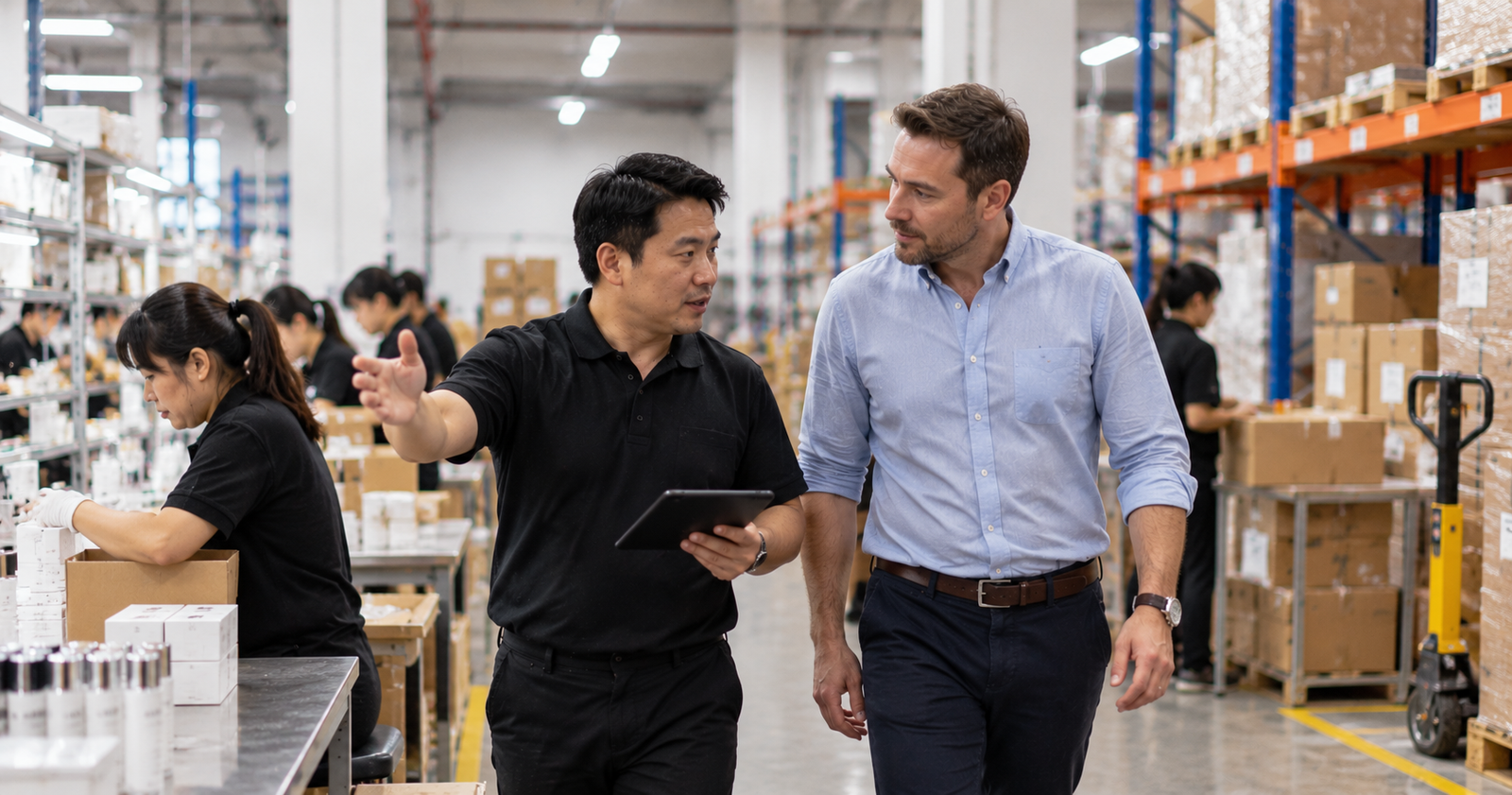
Packaging, quality checks, labeling, barcoding, inventory receiving, and shipment coordination all sit between finished goods and Amazon’s fulfillment network. A sourcing partner with facilities close to the manufacturing base can consolidate some of these activities before inventory leaves China.
Our China operation includes a 45,000-square-foot Shenzhen warehouse that supports quality control, packing, and shipping. The company also offers Amazon FBA preparation through its China and US facilities, including inventory management, quality checks, labeling, barcoding, and shipment to Amazon fulfillment centers.
This arrangement can reduce unnecessary movement and handoffs, particularly for brands already manufacturing in China. The exact savings depend on the product, packaging requirements, order volume, and shipping plan, so sellers should compare the complete workflow rather than assume that every China-based preparation model is automatically cheaper.
Cash Flow Becomes Part of the Sourcing Equation
Amazon sellers often focus on unit economics while overlooking how purchasing decisions affect working capital.
A large production order can reduce purchasing costs in some circumstances, but it also puts more money into inventory before that inventory generates revenue. The timing between paying suppliers, preparing goods, sending stock to Amazon, and receiving sales proceeds therefore becomes part of the profitability calculation.
Lansil Global states that it offers flexible credit terms of up to $1 million, with repayment periods of up to 60 days, subject to its terms and conditions. For a growing seller, access to such terms can potentially change how quickly inventory is replenished without requiring the same amount of cash to be available upfront.
The broader lesson is that sourcing affects more than the factory invoice. Supplier competition can influence purchase costs; quality oversight can protect inventory value; China-based preparation can simplify the path to FBA; and purchasing terms can affect how much capital remains available for the next order.
A sourcing partner should therefore be judged by its effect on the complete product economics rather than by its quoted supplier price alone. We see greater value when sourcing, manufacturing control, FBA preparation, and inventory movement are treated as connected decisions. That approach gives Amazon sellers a clearer path to improving margins without relying on an unrealistic assumption that cheaper products alone create better profitability.