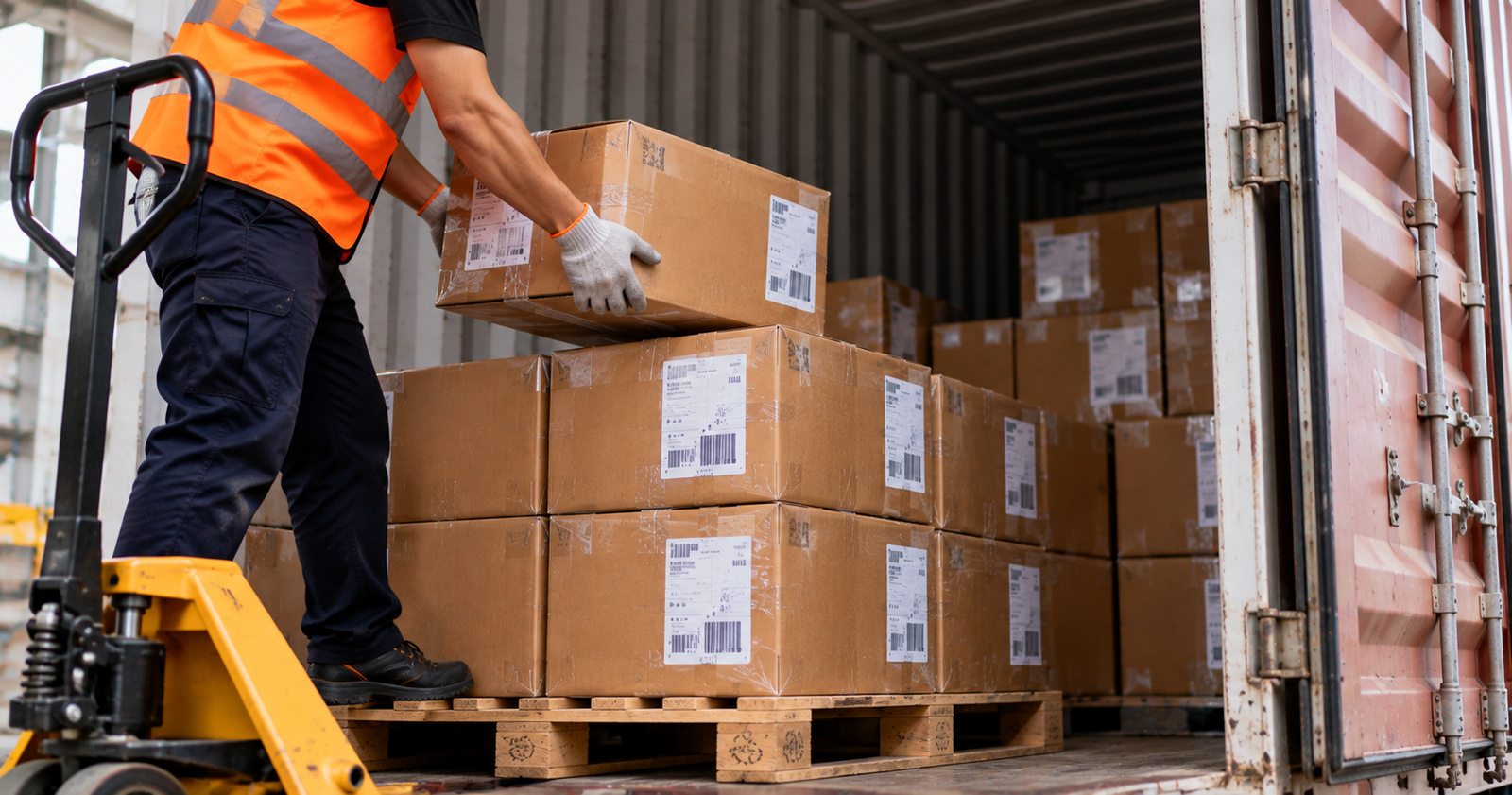
Moving a product from a factory to an international customer involves much more than arranging transportation. Sourcing, manufacturing, quality inspection, inventory handling, freight, and final delivery all influence how efficiently an ecommerce business can operate. A clear logistics process helps us connect these stages and identify potential issues before they affect customers.
Start with a Sourcing Plan
A practical supply chain begins with clear product requirements. Before contacting factories, we need to define specifications, materials, packaging expectations, branding requirements, target markets, and expected order conditions.
For businesses using ecommerce sourcing, supplier selection should therefore involve more than comparing quoted prices. We also need to consider production capabilities, communication, sampling procedures, quality standards, and whether a supplier can support the product as demand develops.
Supplier research can reduce uncertainty at an early stage. Factory evaluation, sample review, and direct communication give us more information before production commitments are made. This is especially useful when the product requires specific packaging or customization.
Match the Manufacturing Model to the Product
Different product strategies require different manufacturing arrangements. Standard products may need relatively straightforward supplier coordination, while customized products require closer communication about specifications and production details.
For white label and private label products, branding requirements should be established before manufacturing begins. Labels, packaging, barcodes, and product details need to match the approved specifications so that later logistics steps do not create avoidable corrections.
ODM manufacturing represents another approach when a product needs to be developed or tailored around a particular business requirement. The important point is to establish responsibilities and specifications before production rather than relying on changes after manufacturing starts.
Build Quality Checks into the Logistics Flow
Quality control should not be treated as a final administrative step. Inspection before goods leave the factory provides an opportunity to identify differences in product details, packaging, labels, or barcodes before inventory enters international transportation.
For ecommerce sourcing, this means connecting supplier management with inspection procedures. A quality issue discovered at the destination can involve additional transportation, replacement, or handling, whereas an issue identified before shipment may be easier to address with the manufacturer.
Documentation also supports this process. Photos, videos, and quality notes can create a clearer record of what was inspected and provide useful information when production requirements need to be communicated to suppliers.
Choose Freight According to Operational Needs
Once goods pass inspection, transportation becomes the next link in the chain. Air and sea freight serve different operational requirements, so the decision should consider product characteristics, inventory planning, destination, budget, and required delivery timing.
A business should also distinguish international freight from final-mile fulfillment. Moving products into a destination country does not automatically mean the order has reached the customer. Customs processes, warehousing, inventory allocation, and domestic delivery may still remain.
For ecommerce sourcing, transportation planning is therefore most effective when it is considered alongside inventory and fulfillment rather than managed as an isolated shipping task.
Decide Where Inventory Should Be Stored
Warehousing location can influence both inventory management and delivery operations. Keeping products close to the manufacturing base can simplify factory pickup and quality coordination, while regional fulfillment centers can place inventory closer to customers.
The appropriate arrangement depends on the business model and sales geography. A company serving several markets may use more than one warehouse location, while another business may prefer centralized inventory until demand becomes more predictable.
For white label and private label operations, warehousing also needs to account for packaging variations, stock-keeping units, and market-specific requirements. Clear inventory records help prevent the wrong version from being allocated to an order.
Connect Fulfillment with Customer Demand
Fulfillment begins when an order needs to be processed, but its effectiveness depends on decisions made much earlier in the supply chain. Inventory accuracy, packaging procedures, order information, and platform integration all contribute to reliable order handling.
For ecommerce sourcing, businesses should consider how orders will move from the selling platform into the fulfillment operation. Integration with platforms such as Shopify or Amazon can reduce manual order handling, while manual methods such as CSV-based processes may be suitable for certain workflows.
Returns should also be considered. A fulfillment system needs procedures for receiving returned products, inspecting them, and determining whether they can be restocked, repackaged, or otherwise processed.
Use Visibility to Coordinate Each Stage
A connected logistics process gives businesses more opportunities to identify problems before they become expensive disruptions. Production updates, inspection records, inventory information, freight status, and fulfillment data each provide a different part of the supply chain picture.
For white label and private label businesses, this visibility is particularly useful because branding and packaging specifications must remain consistent from manufacturing through delivery.
The goal is not to eliminate every possible supply chain problem. Instead, we can create a process where responsibilities, checkpoints, and information flows are clear enough to support timely decisions.
Bringing Sourcing and Fulfillment Together
Lansil Global approaches the supply chain as a connected process covering product sourcing, manufacturing, quality control, freight, warehousing, and fulfillment. Its China manufacturing services include private labeling, white labeling, and ODM manufacturing, supported by an in-house quality control team that checks products, packaging, labels, and barcodes before shipment.
The broader service structure also connects China sourcing and manufacturing with direct China fulfillment, USA order fulfillment, Amazon FBA preparation, and China global freight services. This provides businesses with options for coordinating different stages instead of treating sourcing and fulfillment as completely separate activities.
For companies planning international growth, the practical lesson is straightforward: logistics should be designed as a continuous flow from supplier selection to the customer’s order. By defining requirements early, checking production before shipment, choosing appropriate transportation, positioning inventory carefully, and connecting fulfillment with sales channels, we can build a supply chain that is easier to manage and adapt as the business develops.