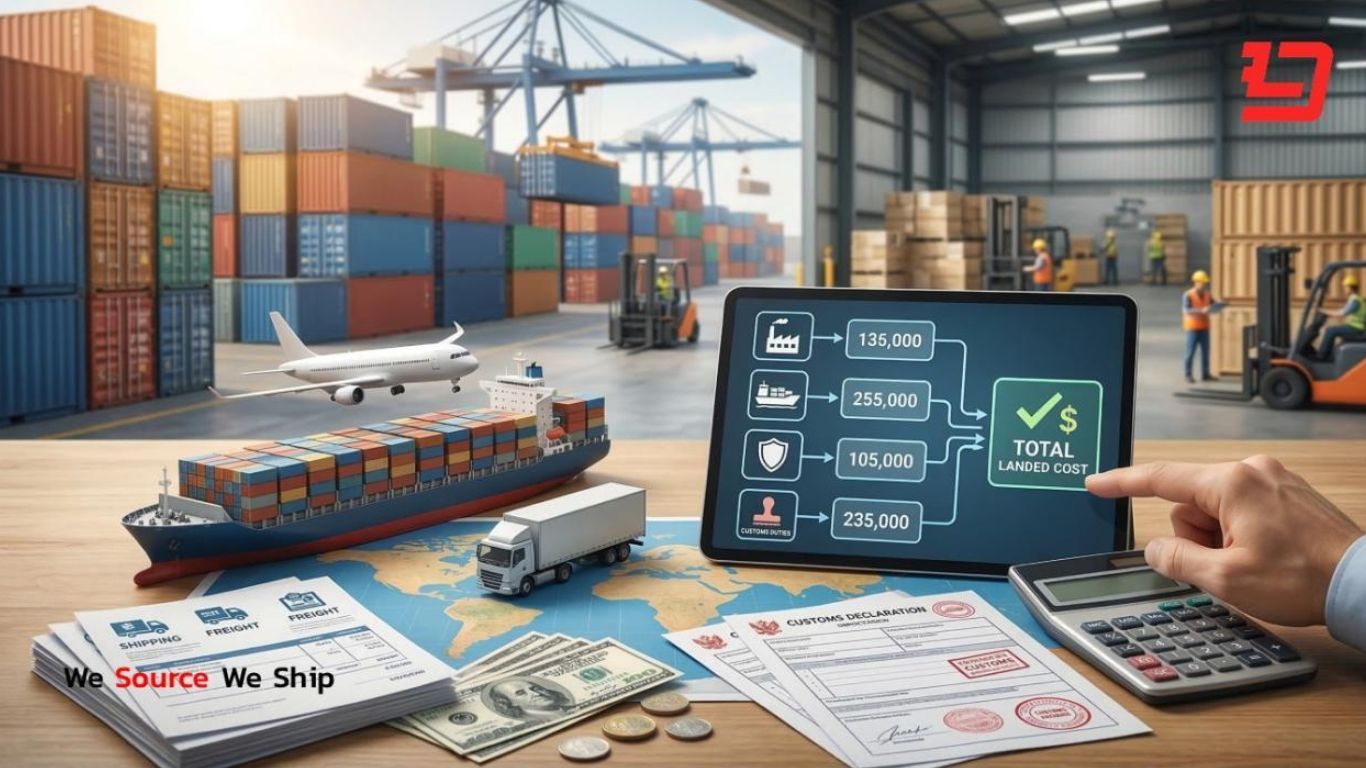
For scaling e-commerce brands, the difference between a thriving business and a struggling one often comes down to a single metric: landed cost. As you move from low-volume sales to established global operations, simply tracking your “cost per unit” from a factory is no longer enough to ensure profitability.
In the complex landscape of international trade—especially with the shifting tariff regulations of 2026—understanding the total journey of your product is the only way to protect your margins.
What Does Landed Cost Mean for Your Bottom Line?
At its simplest, what does “landed cost” mean? It refers to the total price of a product or shipment once it has arrived at its final destination—whether that is your warehouse, an Amazon FBA center, or the customer’s doorstep.
While many new sellers focus on the FOB (Free on Board) price—the price paid to the manufacturer—this is only the starting point. The “landed” version of that cost includes every hidden and explicit fee incurred during the supply chain journey. In today’s volatile market, ignoring these variables can lead to underpricing your products, effectively eroding your profits before the first sale is even made.
Landed Cost Meaning: Beyond the Invoice Price
To truly grasp the landed cost meaning, you must look at it as a “holistic cost.” It represents the reality of global logistics. For a mid-sized company sourcing from China, the landed cost acts as the ultimate truth-teller. It tells you if a $5 item from a distant supplier is actually cheaper than a $7 item from a local one after accounting for sea freight, customs clearance, and terminal handling fees.
By calculating this metric accurately, brands can:
- Establish Precise Pricing: Set retail prices based on real data, not guesswork.
- Optimize Supplier Selection: Compare vendors based on total value rather than just unit price.
- Identify Supply Chain Leaks: Spot where “hidden fees” like port demurrage or currency conversion are eating into the budget.
How Do You Calculate Landed Cost? The Essential Formula
Understanding the theory is one thing, but execution requires a structured approach. How do you calculate landed cost effectively? You must aggregate five primary components:
-
Product Cost
This is the base price paid to the manufacturer for the goods. It includes the raw materials and the labor required for production.
-
Shipping and Freight
This covers the movement of goods across borders. It includes international air or ocean freight, domestic trucking from the port, and “last-mile” delivery fees. For brands using a dual-fulfillment strategy, this also involves the cost of moving inventory between global hubs.
-
Customs Duties and Taxes
These are the fees imposed by the destination country. They could be volatile, particularly in the U.S. E-commerce brands must stay updated on shifting tariff policies and “de minimis” thresholds. Monitoring these geopolitical changes in real-time is vital to protecting your margins and ensuring accurate landed cost calculations.
-
Insurance
To protect against the risk of loss or damage during the long journey from the factory to the warehouse, cargo insurance is a non-negotiable expense that must be factored into the per-unit cost.
-
Overhead and Handling Fees
Often overlooked, these “hidden” costs include:
- Brokerage fees: Paid to customs brokers for clearing shipments.
- Currency conversion (FX) fees: Costs associated with paying international vendors.
- Processing fees: Charges for credit card or bank transfers.
- Storage and Demurrage: Fees for containers sitting at the port longer than expected.
The landed cost calculation formula:
Landed Cost = Product + Shipping + Duties/Taxes + Insurance + Overhead
Strategies for Managing Landed Costs in 2026
As e-commerce becomes more competitive, “winging it” with an Excel sheet is no longer a viable strategy for growing brands. Established companies are now utilizing automated tools and professional 3PL partners to track these costs in real-time.
When calculating the cost per SKU, it is standard practice to allocate freight and taxes based on the value, weight, or volume of the items. For example, if a shipping container holds 1,000 units of varying sizes, the “bulky” items should bear a higher percentage of the freight cost than the “lightweight” items to ensure each product’s profit margin is calculated fairly.
How Lansil Global Helps You Optimize Your Total Costs
Knowing your landed cost is the first step; lowering it is the second. This is where partnering with an end-to-end supply chain expert like Lansil Global becomes a strategic advantage.
Founded in 2015, Lansil Global specializes in helping DTC brands and Amazon sellers navigate the complexities of China sourcing and global fulfillment. Here is how our service model directly impacts your landed cost:
- In-Country Quality Control: By performing AQL (Acceptable Quality Level) checks at the source in China, Lansil prevents the “hidden cost” of shipping defective goods halfway across the world, only to have them returned.
- Amazon FBA Prep at the Source: Lansil provides FNSKU labeling, polybagging, and kitting in China. This is significantly more cost-effective than paying for the same labor at U.S. rates, effectively lowering the landed cost of every unit that enters an Amazon warehouse.
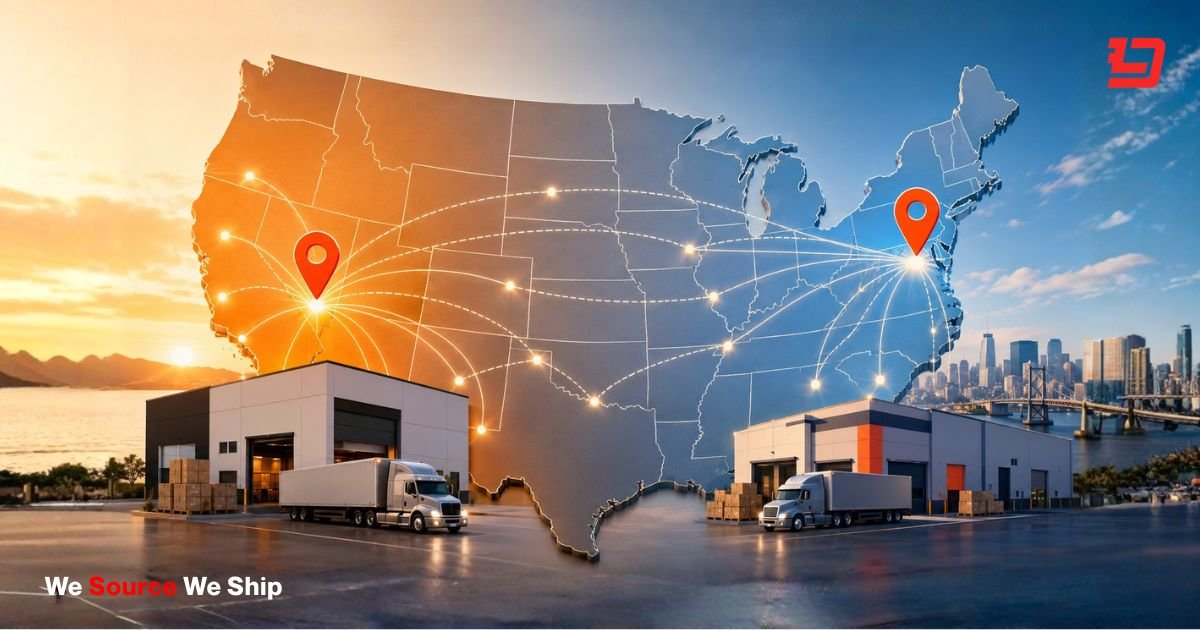
- Dual 3PL Fulfillment: Lansil operates a 45,000 sq. ft. warehouse in Shenzhen for direct global shipping, alongside U.S. warehouses in Nevada and Pennsylvania. This “Smart Routing” allows you to keep long-tail inventory in China (lowering storage fees) while keeping high-velocity items in the U.S. for 2-4 day delivery.
- Transparent Communication: Lansil is widely recognized for our dedicated account managers who provide clear, upfront cost breakdowns and are always there for clear and responsive communication.
In the world of e-commerce, what you don’t measure will hurt you. Landed cost is the most accurate pulse check for your business health. By moving beyond the FOB price and accounting for the 2026 tariff shifts, you can price your products for growth and ensure your supply chain is a competitive advantage, not a financial drain.
Ready to gain full control over your supply chain and optimize your landed costs?
Contact Lansil Global today to speak with our sourcing and fulfillment experts. Whether you need better China sourcing, FBA prep, or faster U.S. fulfillment, we provide the end-to-end solutions your brand needs to scale efficiently!