Understanding the supply chain is crucial for scaling e-commerce brands, as it can mean the difference between sustainable growth and operational chaos. This guide covers two critical processes: distribution and fulfillment.
While often used interchangeably, they serve distinct roles: fulfillment focuses on picking, packing, and shipping individual orders directly to consumers, whereas distribution manages bulk inventory movement between businesses.
Here, we focus on distribution vs. fulfillment to help sellers and Amazon FBA operators choose the approach—or mix of approaches—that drives their growth most effectively.
What Is Fulfillment?
Fulfillment refers to the process of receiving, processing, and delivering individual customer orders directly to consumers. It is the final stage of the supply chain—the “last mile” that determines how quickly and accurately a customer receives their purchase.
Fulfillment centers are designed for B2C (business-to-consumer) and DTC (direct-to-consumer) operations. Their primary activities include:
- Receiving inventory from suppliers or distribution centers.
- Storing products in organized, accessible locations.
- Picking and packing individual items for each customer order.
- Shipping packages directly to residential addresses.
- Managing returns (reverse logistics) efficiently.
Fulfillment operations prioritize speed and accuracy. A well-run fulfillment center handles thousands of small orders daily, often with sophisticated technology such as order management systems, automated conveyor belts, and barcode scanning to minimize errors.
For e‑commerce brands selling through Shopify, Amazon, or their own websites, fulfillment directly impacts customer satisfaction. Late shipments, incorrect items, or poor packaging can lead to negative reviews and lost repeat business.
What Is Distribution?
Distribution focuses on moving large volumes of products between businesses rather than to individual consumers. A distribution center serves as a strategic hub for B2B (business-to-business) operations, managing the flow of inventory to retailers, wholesalers, or regional fulfillment centers.
Key functions of distribution centers include:
- Receiving bulk shipments from manufacturers, often in container or pallet quantities.
- Cross-docking, where inbound goods are immediately sorted and transferred outbound without long-term storage.
- Storing inventory temporarily before redistributing it in smaller bulk quantities.
- Replenishing retail stores, franchise locations, or downstream fulfillment centers.
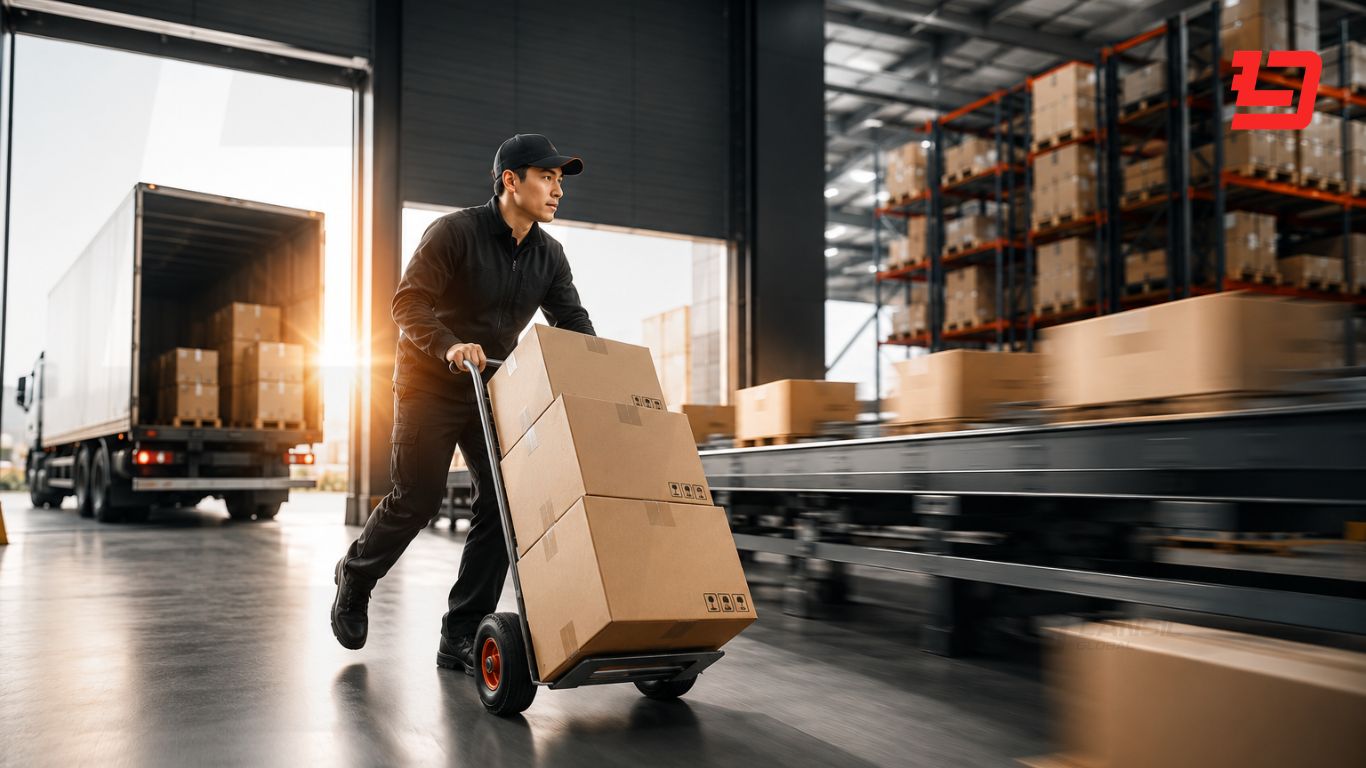
Unlike fulfillment centers, distribution centers are not designed to handle individual customer orders. Instead, they move goods in larger units—pallets, cartons, or cases—to other business locations. Their facility layouts typically feature high ceilings, wide aisles, and heavy-duty equipment, such as forklifts, to manage palletized freight.
Distribution centers are strategically located near major transportation hubs—ports, rail lines, or highway interchanges—to minimize freight costs when moving large volumes.
Key Differences Between Distribution and Fulfillment
To determine which model aligns with your business needs, it helps to examine the specific contrasts across several operational dimensions.
| Aspect | Fulfillment | Distribution |
|---|---|---|
| Order Size | Small individual orders (like 1–5 items per package) | Large bulk orders (including pallets, cartons, containers) |
| Customer Type | Individual consumers (B2C) | Businesses, retailers, warehouses (B2B) |
| Core Activity | Pick, pack, ship; returns processing | Cross-docking, bulk storage, replenishment |
| Location Strategy | Near urban centers for faster last-mile delivery | Near ports, highways, or manufacturing hubs for freight efficiency |
| Technology | OMS, barcode scanners, goods-to-person robotics | WMS, yard management, pallet-level RFID tracking |
| Storage Time | Days to weeks; high turnover, punitive fees for long-term storage | Short to medium term; acts as a flow-through hub |
When to Use Fulfillment Centers
Fulfillment centers are the right choice for businesses whose primary sales channel is direct-to-consumer. If your revenue comes from online orders shipped to individual homes—whether through Amazon FBA, your Shopify store, or marketplace listings—fulfillment infrastructure is essential.
Signs your business needs a fulfillment partner:
- You are processing hundreds or thousands of small daily orders.
- Customers expect fast shipping (2–4 days or less).
- You struggle with seasonal volume spikes during peak sales periods.
- Managing returns in-house is becoming time-consuming and costly.
For e‑commerce brands scaling beyond the startup phase, outsourcing fulfillment to a specialized provider eliminates the need to invest in warehouse infrastructure, staffing, and shipping negotiations.
Providers like Lansil Global operate fulfillment centers in strategic US locations—including Nevada and Pennsylvania—enabling 2–4 day delivery to most domestic customers while maintaining flexible storage and pick-pack capabilities.
When to Use Distribution Centers
Distribution centers are ideal for businesses managing wholesale operations, multiple retail locations, or complex multi-channel inventory strategies. If you supply products to other businesses, replenish your own stores, or need to stage inventory for regional fulfillment centers, distribution infrastructure is necessary.
Common scenarios requiring distribution centers:
- You sell wholesale to retailers or other e‑commerce businesses.
- You operate physical retail stores that require regular replenishment.
- You need to consolidate inventory from multiple suppliers before redistributing.
- You are managing inventory for a multi-node fulfillment network.
Manufacturers and large omnichannel retailers often use distribution centers to lower freight costs by shipping full truckloads rather than individual parcels. By consolidating shipments at a central distribution point, businesses reduce per-unit transportation expenses while maintaining flexibility to allocate inventory where demand exists.
The Hybrid Model: Combining Distribution and Fulfillment
For scaling e-commerce brands, the choice is rarely either/or. Many successful companies operate a hybrid supply chain that leverages both distribution and fulfillment capabilities.
In this model:
- Bulk inventory arrives from overseas manufacturers and moves first to a distribution center near a port or freight hub.
- The distribution center holds inventory in larger quantities and replenishes regional fulfillment centers as needed.
- Fulfillment centers pick, pack, and ship individual orders to end consumers.
This approach offers several advantages:
- Lower inbound freight costs by shipping bulk containers rather than parcels.
- Reduced storage fees by keeping long-term inventory at lower-cost distribution facilities.
- Faster last-mile delivery by positioning fulfillment centers close to population centers.
- Inventory flexibility to allocate stock across sales channels without duplicating storage.
Lansil Global supports this hybrid model through our dual-continent strategy. With sourcing and manufacturing operations in China, plus fulfillment centers in both Nevada and Pennsylvania, brands can move inventory efficiently from Asian factories into US distribution networks. This structure allows businesses to maintain lean inventory while offering competitive shipping speeds across the United States.
How to Choose the Right Model for Your Business
Selecting between distribution and fulfillment—or a combination of both—depends on your business model, sales channels, and growth stage.
Ask yourself these questions:
- Who is your primary customer? If you sell directly to consumers, fulfillment is non-negotiable. If you sell wholesale or supply other businesses, distribution is essential.
- What is your average order size? Small parcel shipments point to fulfillment; pallet or case quantities point to distribution.
- Where are your customers located? Fulfillment centers should be near your customer base; distribution centers should be near freight entry points.
- How much inventory do you hold? High-volume, slower-moving inventory may be better suited to distribution centers with longer allowable storage windows.
For established e‑commerce brands, the most efficient approach often involves partnering with a supply chain provider that offers both capabilities. This eliminates the complexity of managing multiple vendor relationships while maintaining the flexibility to adjust strategies as the business scales.
While fulfillment focuses on the speed and accuracy of individual customer orders, distribution prioritizes the efficient movement of bulk inventory between businesses.
For mid-sized companies and established sellers, the decision between distribution and fulfillment is not about choosing one over the other—it is about designing a logistics network that aligns with sales channels, customer expectations, and cost structures.
Lansil Global provides end-to-end supply chain solutions that bridge both worlds—from sourcing and manufacturing in China to US-based fulfillment and Amazon FBA preparation. If you are considering outsourcing and upgrading your logistics operations, Lansil Global can help manage both distribution and fulfillment for you to simplify complexity and accelerate growth.