For many e-commerce brands, handling order fulfillment in-house starts as a logical choice. You control the process, maintain quality, and save money when order volumes are low.
But as your business grows, that same in-house operation can quickly become a bottleneck. Packing orders consumes hours better spent on marketing and product development. Storage space runs out. Shipping errors increase. And customers start expecting faster delivery than your garage or small warehouse can provide.
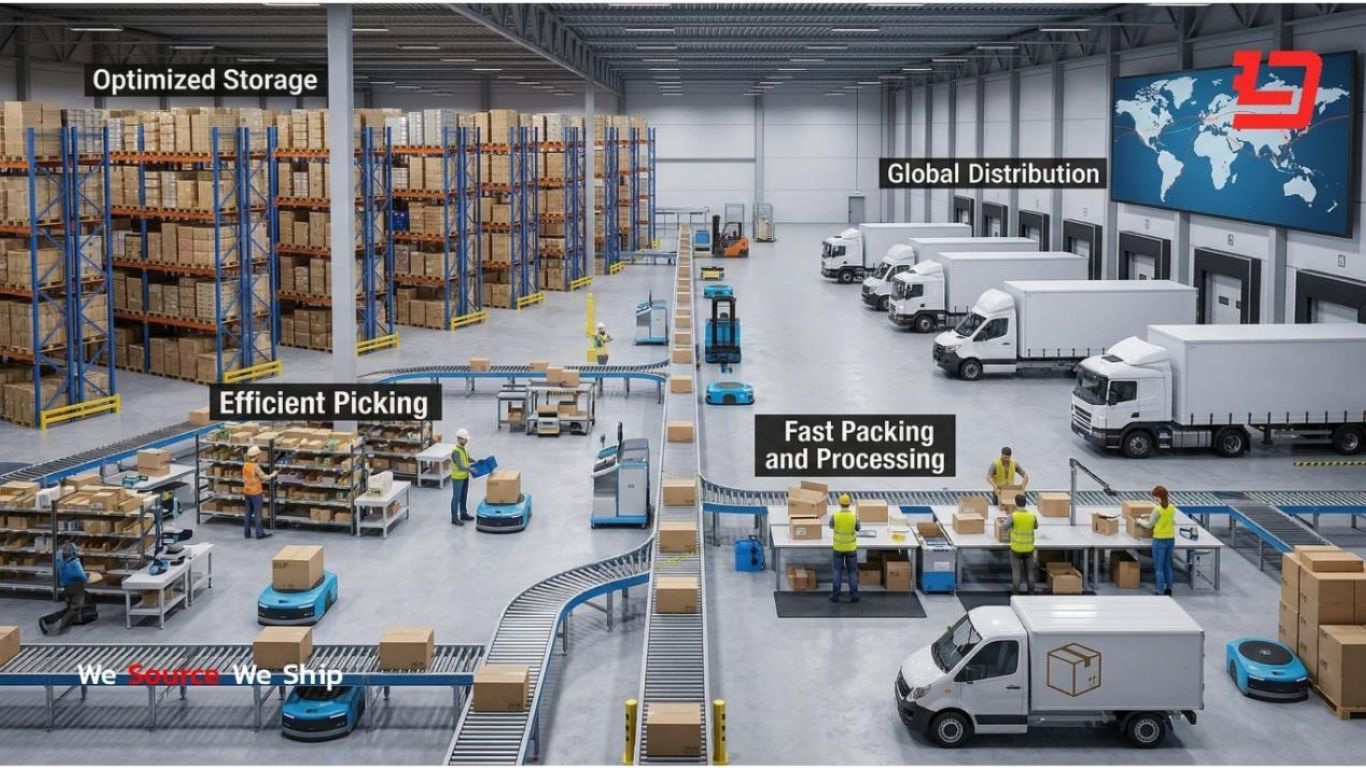
This is where 3PL e-commerce fulfillment services come into play. A third-party logistics provider takes over the warehousing, picking, packing, shipping, and returns management for your orders. But knowing when to make that transition—and why it benefits your bottom line and customer experience—requires a clear understanding of the warning signs and strategic advantages.
When to Outsource Fulfillment: 6 Clear Signs
Not every e-commerce business needs a 3PL immediately. However, when you recognize one or more of the following thresholds, it’s time to seriously evaluate third-party logistics order fulfillment.
1. You Consistently Process Over 300 Orders Per Month
The 100–300 monthly order range is often called the “evaluation zone.” Once you reliably exceed 300 orders per month—and certainly past 500 or 1,000—the cost and time of in-house fulfillment typically exceed what a 3PL would charge. Your team’s hours have real value. If those hours are spent taping boxes instead of acquiring customers or launching products, you are losing money.
2. Your Home, Garage, or Office Has Become a Chaotic Storage Unit
As your SKU count grows, so does the need for organized, scalable storage. When you cannot find products quickly, when boxes pile up in hallways, or when you delay buying inventory because you have nowhere to put it, you need professional warehousing. 3PL order fulfillment services provide flexible, on-demand storage space that expands with your catalog.
3. Order Errors Are Hurting Your Reputation
The industry standard for order accuracy is 99.5% or higher. Small in-house operations often see error rates between 2% and 5% as they rush to keep up. Wrong items, incorrect addresses, and missing accessories lead to returns, refunds, and angry customers. A professional 3PL uses barcode scanning and automated verification to keep errors below 0.5%.
4. Seasonal Peaks Overwhelm Your Team
Black Friday, holiday sales, and flash promotions can triple or quadruple your daily order volume overnight. Hiring temporary staff is expensive and risky. Working your team to exhaustion leads to burnout and mistakes. A 3PL maintains flexible labor capacity specifically to absorb these seasonal spikes without missing a beat.
5. Your Shipping Costs Are Eating Your Margins
Without high shipping volume, you cannot access the deepest carrier discounts. USPS, UPS, and FedEx reserve their best rates for shippers moving thousands of packages daily. A 3PL aggregates volume across many brands, passing along discounts of 15% to 40% below retail rates. Often, these shipping savings alone offset the entire cost of the 3PL’s pick-and-pack fees.
6. You Sell on Multiple Channels
Once you sell on your own Shopify store, Amazon, Walmart, and perhaps a subscription box or wholesale channel, inventory synchronization becomes a nightmare. Spreadsheets fail. Overselling happens. A modern 3PL integrates directly with all your sales channels, updating inventory in real time across every platform.
Why 3PL E-commerce Fulfillment Services Deliver Strategic Advantages
The decision to outsource is not just about solving problems. It is about unlocking capabilities that most growing brands cannot build on their own.
1. Convert Fixed Costs into Variable Costs
A warehouse lease, shelving, packing tables, barcode scanners, and a small staff represent significant fixed capital investments. You pay these costs regardless of whether you ship 100 orders or 1,000.
With 3PL e-commerce fulfillment services, you pay only for what you use—storage space by the pallet or shelf and pick-and-pack fees per order. This variable cost model protects cash flow and reduces financial risk during slow seasons.
2. Ship Faster by Using Distributed Inventory
Customers expect delivery in two to three days. Meeting that expectation from a single warehouse is expensive if your customers are spread across the country. A 3PL with multiple fulfillment centers allows you to split inventory across regions.
When an order comes in, the system routes it to the warehouse closest to that customer. The result: two-day ground shipping without paying for expedited air services. This distributed model also reduces the final-mile delivery cost, which is often the most expensive leg of shipping.
3. Access Enterprise-Grade Technology Without the Investment
A proper warehouse management system (WMS) costs hundreds of thousands of dollars to build or license. A 3PL has already made that investment. You get access to real-time inventory visibility, automated order routing, and seamless integration with your e-commerce platform.
Many 3PLs also provide customer-facing tracking portals and automated low-stock alerts. These capabilities would be out of reach for most mid-sized brands to build internally.
4. Turn Returns from a Nightmare into a Competitive Advantage
E-commerce return rates may reach 20% to 30%, especially in categories like apparel. Processing returns in-house is slow, unpleasant, and takes space away from outbound operations. A 3PL’s dedicated returns department receives, inspects, restocks, or disposes of returned items quickly. Fast refunds or exchanges keep customers happy and get sellable inventory back online faster.
What to Look for in a 3PL Partner
Not all 3PL order fulfillment services are created equal. When evaluating 3PL providers, focus on these key criteria:
- Order accuracy documented in their SLA: Look for 99.5% or higher, with penalties for missing that target.
- Native integrations with your platforms: Avoid providers that rely on manual CSV uploads for orders or inventory.
- Transparent, all-in pricing: Request a complete fee schedule including receiving, storage, pick-and-pack, shipping, and any monthly minimums or account fees.
- Warehouse locations that match your customer geography: The closer your inventory is to your buyers, the faster and cheaper delivery becomes.
How Lansil Global Supports Growing Brands
For brands ready to make the move, Lansil Global provides a complete solution that bridges China sourcing and global fulfillment. We operate fulfillment centers in both China and the United States, giving you flexibility based on where your customers live and where your products are made.
From our US locations, shipments reach customers across America in 2–4 days. From our China fulfillment center, we ship to over 171 countries in 3–10 days. We also offer specialized Amazon FBA preparation services from both countries, ensuring your products meet Amazon’s strict requirements before they ever reach a fulfillment center.
An in-house quality control team inspects products before they leave China—a critical safeguard when sourcing overseas. And for established brands with steady order volumes, Lansil Global offers up to $1 million in credit with flexible payment terms up to 60 days, addressing the cash flow challenges that often accompany rapid growth.
Making the Decision
The right time to outsource your fulfillment is when in-house operations are holding back your growth, when shipping costs are too high, or when you need capabilities—like distributed inventory or professional returns processing—that you cannot build affordably on your own. For many brands, that moment arrives between 300 and 1,000 monthly orders.
Outsourcing to a 3PL is not admitting defeat. It is a strategic move that frees your team to focus on what they do best: developing great products, marketing effectively, and serving customers. And with the right partner, your customers will never know the difference—except that their orders arrive faster and more accurately than ever before. For more information, you can contact Lansil Global.