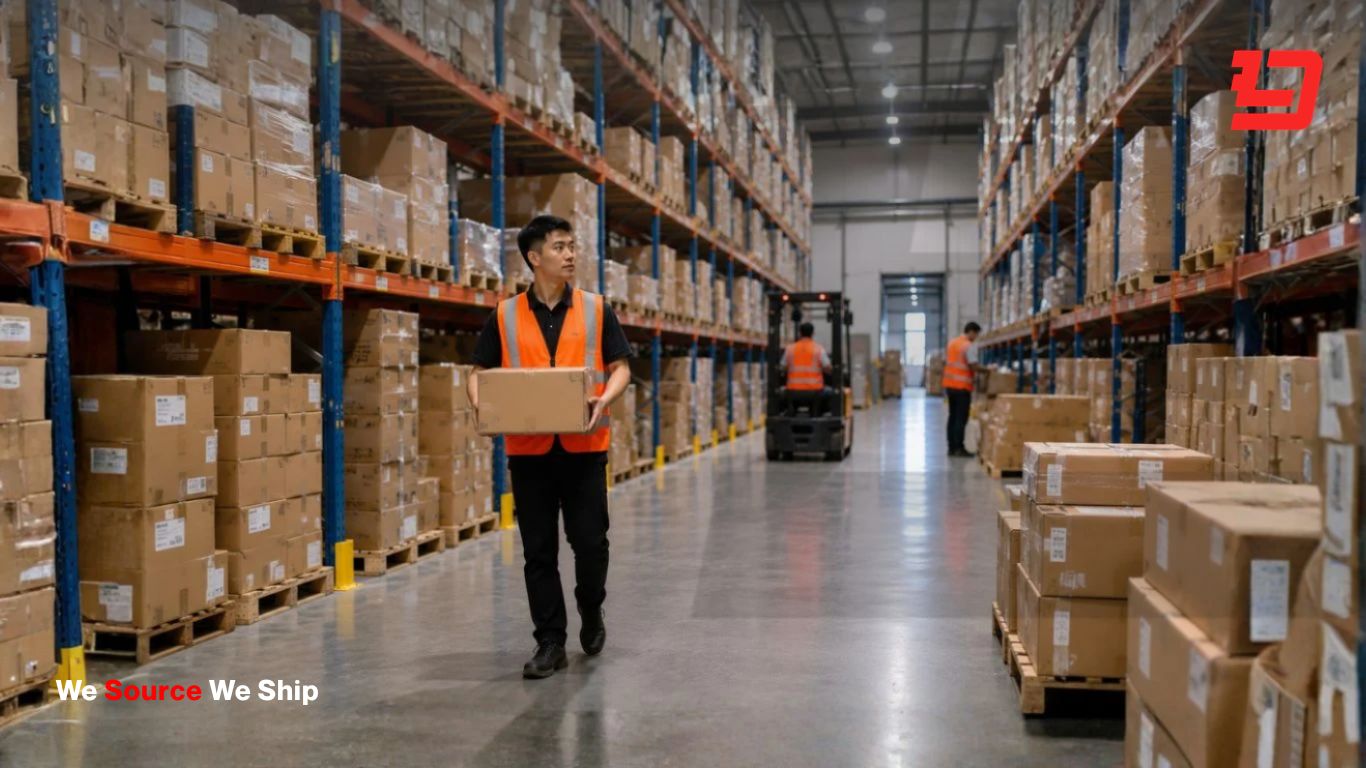
Growth is positive, but it can expose weaknesses in order fulfillment. A process that worked with a modest daily order flow may become unreliable during promotions, product launches, or seasonal peaks. When shipping consumes too much time, space, and capital, outsourcing may be more practical than continually adding staff and warehouse capacity.
A third-party logistics provider, or 3PL, manages activities such as inventory storage, order processing, picking, packing, shipping, and returns for another company. The right time to outsource fulfillment depends on your operating model, but the following signs suggest your ecommerce business should evaluate external fulfillment support.
1. Order Volume Is Outgrowing Your Internal Capacity
The clearest sign is a widening gap between sales growth and fulfillment capacity. Orders may take longer to process, shipping cut-off times may be missed, and your team may need overtime whenever demand rises.
Occasional busy days do not automatically justify outsourcing. However, if high volume has become normal—or promotions repeatedly overwhelm your operation—you may need infrastructure that can scale without constant hiring, training, and space expansion. A 3PL can provide access to additional labor and warehouse capacity, although you should review volume commitments, peak-season rules, and service levels before signing.
2. Your Fulfillment Accuracy Is Declining
Late, incomplete, or incorrect orders often indicate that the current workflow has too many manual steps or insufficient quality checks. As volume increases, small weaknesses can turn into repeated complaints, reshipments, refunds, and customer support tickets.
Established 3PL e-commerce fulfillment services typically use defined receiving, storage, picking, packing, and dispatch procedures. Many also connect with ecommerce platforms so order information moves into the fulfillment system automatically. This can reduce manual entry, but merchants should confirm integration scope, inventory-sync frequency, exception handling, and reporting before onboarding.
3. You Are Running Out of Storage Space
Storage problems often appear before a brand notices a broader fulfillment issue. Fast-moving products compete with slow stock, returns occupy sellable space, and packaging materials spread into areas not designed for warehouse work.
Leasing a larger facility may solve the immediate constraint, but it also introduces fixed rent, equipment, insurance, management, and staffing costs. A 3PL offers shared infrastructure without requiring a complete in-house warehouse operation. Compare storage charges, receiving fees, minimums, and inventory-aging rules to understand the actual cost.
4. Fulfillment Costs Are Difficult to Control
In-house fulfillment costs extend beyond postage. They include labor, rent, utilities, packaging, equipment, software, insurance, error correction, and management time. If these expenses are spread across departments, calculating the real cost per order becomes difficult.
A 3PL will not always be cheaper, especially for low-volume businesses or products requiring unusual handling. However, structured storage, pick-and-pack, packaging, and shipping charges can make costs more visible. Compare your fully loaded internal cost per order with the provider’s total quote, including onboarding, returns, special projects, and peak-season surcharges.
5. Your Team Spends More Time Shipping Than Growing
Founders and commercial teams create more value through product development, supplier management, marketing, customer retention, and expansion than through printing labels or reorganizing warehouse shelves.
When senior staff routinely step into daily fulfillment, logistics has become a strategic distraction. Outsourcing can return time to growth activities. It does not remove management responsibility: your team must still forecast demand, set inventory policies, monitor performance, and communicate promotions or product changes to the provider.
6. New Sales Channels or Markets Are Adding Complexity
Selling through one online store is different from coordinating Shopify orders, marketplace requirements, Amazon inventory, wholesale shipments, and international customers. Each channel may have different labeling, packaging, delivery, replenishment, and tracking requirements.
This is where a partner with broader supply chain capabilities may be valuable. We combine China product sourcing, manufacturing support, quality control, freight coordination, and fulfillment in one workflow. Our Shenzhen sourcing team supports supplier research, negotiations, due diligence, factory audits, sampling, and purchase orders through a network of more than 2,000 supplier and factory relationships. Once production is complete, inventory can move into direct China fulfillment, Amazon FBA preparation, or the company’s U.S. warehouse network.
We support product categories including cosmetics, electronics, apparel, toys, household items, and other consumer products. This category knowledge is useful when brands need product-specific inspection, protective or branded packaging, accurate SKU handling, kitting, labeling, and returns procedures while adding Shopify, Amazon, wholesale, or international sales channels.
7. Returns and Inventory Visibility Are Becoming Unmanageable
Returns create problems when items are not inspected quickly or teams lack clear rules for restocking, refurbishment, quarantine, or disposal. Inaccurate inventory records can also lead to overselling, unnecessary replenishment, or stockouts.
A suitable 3PL should provide a documented returns workflow and usable inventory reporting. Ask how returned items are graded, how discrepancies are investigated, and how quickly inventory status is updated.
Lansil Global operates three fulfillment facilities: Shenzhen in China, Nevada on the U.S. West Coast, and Pennsylvania on the East Coast. In 2026, the Nevada warehouse expanded from 66,722 to 106,624 square feet, while the Shenzhen fulfillment center grew from 48,438 to approximately 98,221 square feet. The Pennsylvania facility provides a further 32,069 square feet of East Coast capacity, bringing the network to more than 236,000 square feet across China and the United States.
This three-location structure gives brands more options for inventory placement. International orders can ship directly from Shenzhen, while U.S.-focused inventory can be positioned in Nevada or Pennsylvania to reduce shipping distances and support local returns. Across our network, we support storage, inventory management, picking and packing, kitting and bundling, branded packaging, Amazon FBA preparation, returns processing, and global distribution.
Is It Time to Use a 3PL?
One sign may only require a process improvement. Several recurring signs—rising errors, space constraints, unpredictable costs, overloaded staff, and channel complexity—suggest that your ecommerce business should compare outsourcing with further internal investment.
The best provider is not simply the one with the lowest pick-and-pack rate. Evaluate system compatibility, warehouse locations, receiving procedures, inventory accuracy, return handling, customer support, pricing transparency, and the ability to support future growth.
At Lansil Global, we help ecommerce brands connect product sourcing, factory coordination, quality control, freight, and fulfillment through one supply chain workflow. Inventory can be routed from the Shenzhen center to customers worldwide or positioned in Nevada and Pennsylvania for faster U.S. delivery and local returns. This model may suit scaling brands that want fewer service handoffs and more flexibility across beauty and cosmetics, electronics, jewelry and accessories, health and wellness, and other consumer categories. Contact us to review your order profile, product requirements, sales channels, and inventory plan.