Scaling an e-commerce brand often involves a precarious balance between rapid growth and consistent product quality. For businesses selling high-ticket items, the margin for error is nearly zero, as a single defective unit may erase the profit from dozens of successful sales.
Key Points for High-Ticket QC
- Profit Erosion: Returns, especially on high-ticket items (over $200), can consume 20-30% of total profits due to reverse logistics and inventory depreciation.
- The Quality Firewall: Implementing 100% inspection at the source acts as a buffer, preventing defective goods from ever entering the international supply chain.
- Transparency is Mandatory: Avoid “kickback agents” by using in-house teams that provide real-time video and photo evidence of inspections.
- Customization: Effective QC is not one-size-fits-all; it ranges from statistical sampling to 100% piece-by-piece checks based on product value and risk.
How Returns Destroy High-Ticket Margins
For brands selling premium electronics, high-end furniture, or specialized equipment, “return” is the most expensive word in the vocabulary. When a customer returns a $500 item, the seller isn’t just losing the sale; they are entering a cycle of high-cost reverse logistics and asset devaluation.
1. High Reverse Logistics and Handling Costs
The average cost of processing a single return ranges from $10 to over $40. This includes the initial shipping cost, the return freight, warehouse labor for inspection, and the administrative cost of customer support.
For heavy or fragile high-ticket items, these shipping fees can be significantly higher, often making the return shipping cost more than the original manufacturing profit. In international trade, where the items must often travel back across borders, these costs can easily double.
2. Inventory Depreciation and the “Open-Box” Problem
This is the most lethal hidden cost for electronics and luxury sellers. Once a high-ticket item is unboxed and handled, it often cannot be sold as “new” again. Statistics show that 5% to 30% of returned goods end up being sold at a steep discount as “open-box” or refurbished units.
In some cases, if the original packaging is damaged or a specific component is missing, the product becomes a total loss. Unlike low-cost apparel, a “minor scratch” on a $1,000 espresso machine can render the entire unit unsellable at its original price point.
3. Loss of Marketing and Acquisition Spend
The high Customer Acquisition Cost (CAC) spent to secure a high-ticket buyer is completely forfeited during a return. If you spent $50 in advertising to gain one customer, a return means that $50 is gone forever, alongside the logistics costs.
For many scaling brands, high return rates can lead to a negative return on ad spend (ROAS) very quickly. Furthermore, the lifetime value (LTV) of a disappointed customer drops to zero, representing a massive long-term opportunity cost.
| Return Impact Factor | Low-Ticket Items ($15 – $30) | High-Ticket Items ($200 – $5000+) |
|---|---|---|
| Logistics Cost | Low; often discarded | High; requires secure transit |
| Resale Value | High (if unopened) | Significant drop (Open-box / Refurbished) |
| Marketing Recovery | Easy to offset | Hard to recover CAC |
| Brand Impact | Minor annoyance | Potential for chargebacks |
Controllable vs. Uncontrollable Returns: Where to Focus
To solve the problem, we must first categorize why returns happen. E-commerce returns generally fall into two categories: those we can control and those we cannot.
Controllable Returns: The Target for Custom QC
Controllable returns are caused by seller or factory errors. These are the primary targets for our specialized pre-shipment QC protocols.
- Manufacturing Defects: Functional failures or cosmetic damage during production.
- Incorrect Specifications: Shipping the wrong size, color, or model—a common issue in small-batch customization.
- Inaccurate Descriptions: When the physical product does not match the website’s claims or images.
- Packaging Failures: Damage occurring during transit because the inner or outer packaging was insufficient for international transit.
Uncontrollable Returns: Managing Customer Behavior
These are driven by the buyer’s internal state rather than the product quality.
- Buyer’s Remorse: The customer simply changes their mind after the purchase.
- Impulse Buying: Buying multiple versions of a product to try them out (bracketing).
- Fraudulent Returns: “Wardrobing” or returning a used item for a full refund.
While we cannot stop a customer from changing their mind, we can ensure that every “controllable” reason is eliminated before the product ever leaves the source and is shipped to the end customer.
Shifting from Sampling to 100% Inspection
Traditional sourcing uses the AQL (Acceptable Quality Limit) sampling method. While efficient for $5 t-shirts, sampling is a gamble for high-value goods.
- The Risk: If a sample size of 80 units passes in a batch of 1,000, there could still be 20 defective $500 units that reach your customers.
- The Solution: For “Hero Products” or high-value electronics, moving toward 100% Quality Control ensures that every single unit is touched, tested, and verified at the source before it enters the international supply chain.
Why “Kickback Agents” Fail Your Brand?
Many overseas brands rely on small-scale sourcing agents or third-party inspection companies. While this seems convenient, it often introduces a “hidden” risk: the kickback culture.
Some individual agents or poorly managed firms accept “commissions” or kickbacks from factories. In exchange, they may “look the other way” regarding minor defects or the use of cheaper, sub-standard materials. For the brand owner, this results in a QC report that looks perfect on paper, while the actual cargo is riddled with ticking time bombs.
Identifying Unreliable QC Practices:
- Lack of Visual Proof: The agent provides a written checkbox report, but no original photos or videos of the testing process.
- Vague Metrics: Using terms like “Good Quality” instead of specific measurements (e.g., “Output voltage: 12.02V”).
- Conflict of Interest: The agent is also the one who recommended the factory, making them less likely to report failures that would delay their commission.
Lansil Global Advantage: Transparent and Customizable QC Solutions
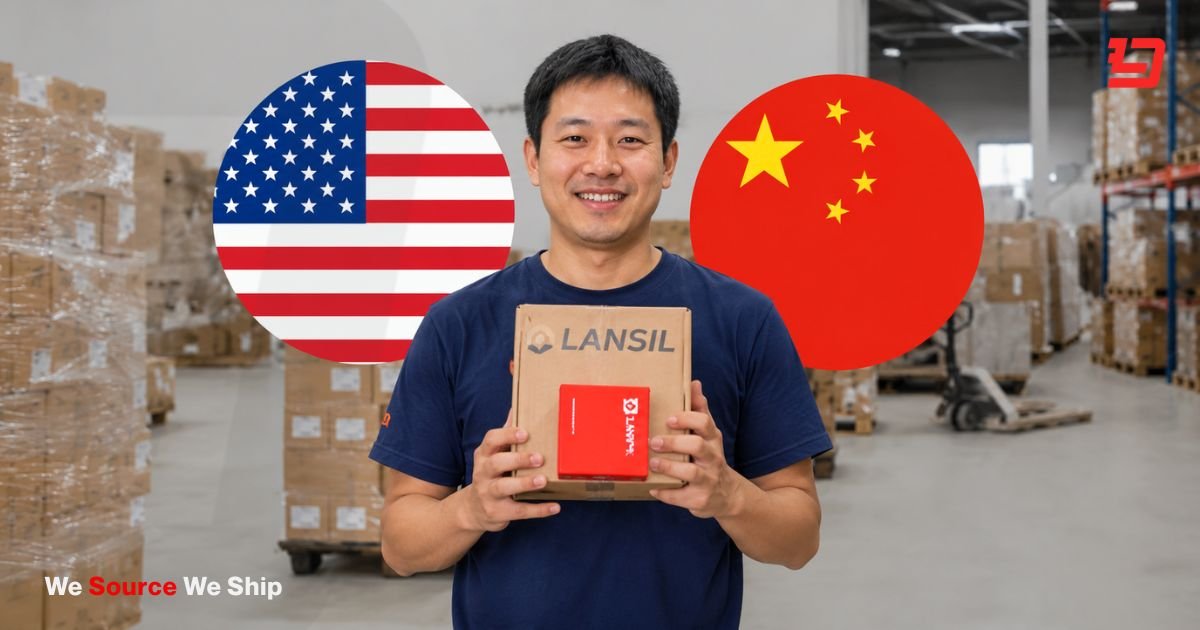
Lansil Global protects sellers from defects and hidden issues by providing an end-to-end quality control system.
In-House QC Team in China
Lansil operates an internal QC team based in Shenzhen, China. Once products arrive at the fulfillment center, the team performs a second round of inspection before the goods are shipped internationally. This process acts as a final safeguard against defects.
Full Transparency Throughout the Process
Transparency is a key part of Lansil’s service. Sellers receive detailed inspection reports, including real-time photos, videos, and notes taken on site. This level of visibility helps eliminate the uncertainty often associated with traditional sourcing agents.
Customized Quality Inspections
Every inspection follows the client’s acceptable quality level (AQL) and product specifications. Lansil also checks packaging, labels, and barcodes to ensure compliance with the requirements of overseas marketplaces such as Amazon FBA.
Free Replacement and Supplier Communication
If defective products are found, Lansil works directly with the supplier to replace them immediately at the source without additional fees. The team will also communicate quality expectations to manufacturers to improve production consistency in future orders.
Summary: Key Takeaways for Brand Protection
- Protect Your Margins: High-ticket returns are not just a cost of doing business; they are a preventable drain on your net profit.
- Isolate the Source: Quality must be verified before products reach the fulfillment center or the end consumer.
- Demand Transparency: Work with reliable partners who provide visual evidence and use in-house teams.
- Customized Rigor: Use 100% inspection for your most expensive or fragile items to ensure a perfect “unboxing” experience.
Secure Your Supply Chain with Lansil Global
Building a “Quality Firewall” is the most effective way to protect your brand’s reputation and bottom line. Whether you are selling premium electronics, specialized equipment, or fragile luxury goods, Lansil Global provides the boots-on-the-ground expertise needed to ensure your products reach customers safely and undamaged.
Ready to upgrade your China sourcing and QC process?
Contact Lansil Global today to discuss a customized inspection plan that fits your brand’s scaling needs. Let us be your trusted supply chain partner so you can focus on growing your business with confidence!